








Building with magnetic tiles is a blast, and when you add marbles to the mix, things get even more exciting. A magnetic tile marble run lets kids (and adults!) create awesome tracks and watch marbles zoom through. It’s a fun way to play and learn at the same time. You can build all sorts of cool structures, from simple ramps to elaborate multi-level runs. It's all about creativity and seeing what you can come up with.
Key Takeaways
- Magnetic tile marble runs combine building fun with physics lessons, teaching kids about gravity, friction, and motion through play.
- Choosing the right set involves looking at size, age appropriateness, and brand quality, with compatibility for future expansions being a plus.
- Designing complex marble runs at home means planning layouts, adding twists, and using supports to keep structures stable.
- Creative play is encouraged by open-ended building, storytelling, and adding interactive elements to the magnetic tile marble run.
- Safety is important, especially with younger children, so always supervise and check for wear and tear on the magnetic tile marble run pieces.
- These sets boost early learning by improving fine motor skills, teaching cause-and-effect, and developing spatial reasoning.
- Hosting marble run challenges adds a competitive and fun element, encouraging problem-solving and teamwork.
- Magnetic tile marble runs offer long-term value by promoting lifelong learning and can be a toy that's passed down through generations.
Understanding the Science Behind Magnetic Tile Marble Run
Magnetic tile marble runs aren't just fun toys; they're fantastic tools for exploring basic physics principles right in your living room. It’s pretty neat how these simple magnetic pieces can teach kids (and adults!) about forces, motion, and structure.
Magnetic Connections and Stability Principles
The magic starts with the magnets. These tiles snap together thanks to the attraction between opposite poles. This magnetic connection is what gives your marble run its structure. Stronger magnets mean a more stable build, especially when you start adding height or twists. When you connect tiles, you're creating a system where the forces are distributed. Think about it: a wobbly tower of blocks is easy to knock over, but a well-connected magnetic structure can withstand a bit more. It’s all about how the pieces lock together to resist movement.
Exploring Gravity and Acceleration
Once your track is built, gravity takes over. As the marble rolls down, gravity pulls it towards the Earth. The steeper the slope, the faster the marble goes. This is where acceleration comes in. The marble speeds up as it descends. You can experiment with different slopes to see how much faster the marble travels. It’s a simple way to show how gravity influences motion and how changes in the track affect speed. You can even time the marbles to see the difference.
The Role of Friction in Marble Movement
Friction is the force that opposes motion. When the marble rolls, there's friction between the marble and the track surface. Smoother tiles and marbles mean less friction, allowing the marble to roll faster and further. Rougher surfaces create more friction, slowing the marble down. You can test this by using different marbles or even trying to build sections of your track with different materials (if you have them) to see the effect. It’s a subtle but important factor in how your marble run performs.
Analyzing Track Slope and Curvature
The angle of your track, or its slope, directly impacts the marble's speed. A gentle slope might result in a slow, steady roll, while a steep incline can lead to a rapid descent. Curvature, on the other hand, introduces centripetal force. When a marble goes around a bend, it wants to keep going in a straight line. The track's curve forces it to change direction. If the curve is too sharp or the speed is too high, the marble might fly off the track. This is a great way to learn about forces and motion in a hands-on way. Magnetic tile building ideas often incorporate these elements.
Material Engineering and Durability
Magnetic tiles are typically made from durable plastics like ABS, which are chosen for their strength and safety. The magnets themselves are usually neodymium, known for their strong magnetic pull. The quality of these materials affects how long the tiles last and how well they hold up to repeated use. Better quality materials mean less wear and tear, so your marble runs can stay epic for longer. It’s a bit like real-world engineering, where material choice is key.
Educational Value for STEM Learning
These marble runs are fantastic for STEM (Science, Technology, Engineering, and Math) learning. Kids naturally experiment with building, testing, and redesigning. They learn about:
- Physics: Gravity, acceleration, friction, momentum.
- Engineering: Structural stability, design, problem-solving.
- Math: Measuring distances, angles, and time.
- Technology: Understanding how systems work together.
It’s play that doesn’t feel like learning, but it absolutely is. Many parents find these sets are a great way to introduce complex concepts in a simple, engaging format. Creative magnetic tile building ideas can further boost this learning.
Comparing Traditional and Magnetic Runs
Traditional marble runs, often made of wood or plastic tubes, can be fun but sometimes lack the flexibility of magnetic tiles. Magnetic tiles allow for much more open-ended building. You can create multi-level structures, intricate pathways, and even combine different sets. The magnetic connections make assembly and disassembly quick and easy, which is a big plus for younger builders or when you want to change your design on the fly. It’s this adaptability that makes magnetic tile marble runs stand out.
Selecting the Right Magnetic Tile Marble Run for Your Family
Choosing the best magnetic tile marble run set for your family’s needs isn’t just about grabbing the first colorful box you see online. There’s a bit more to think about—especially if you want hours of problem-solving, hands-on fun at home, or you’re considering it for a school or library project anywhere in the U.S. Here’s how you can make a confident choice that fits your family’s style, budget, and creative dreams.
Evaluating Set Sizes and Piece Counts
The size of the set really impacts what you can build. More pieces typically means bigger, more complex structures—something to keep in mind if you want to create epic multi-level tracks or group projects. Look for variety too. Sets often include:
- Straight and curved track pieces
- Base plates and support columns
- Unique features, like spinners or gates
| Set Size | Number of Pieces | Build Ideas |
|---|---|---|
| Starter | 40–70 | Simple runs, basics |
| Medium | 100–150 | Multi-level, combos |
| Large/Deluxe | 200+ | Group builds, races |
If you’re not sure where to start, a versatile mid-sized set is great for most families and can always be expanded later.
Assessing Age Appropriateness and Safety
Not all sets are suited for every age. Most brands list recommended ages, and it’s best to follow their advice, especially for younger builders. Key things to check:
- Piece size (avoid small parts for toddlers)
- Rounded, non-sharp corners
- Non-toxic materials
If you have kids of varying ages at home, look for sets that work well for a range of skill levels.
Comparing Brands and Construction Quality
Quality matters a lot—not just for durability, but for safety and ease of use. Reliable magnetic strength helps prevent accidental collapses, which can be frustrating for little builders. The PicassoTiles Magnetic Marble Run set is highly regarded for its unique magnetic connections, allowing for secure and creative builds.
Check for these signs of sturdy construction:
- Consistent, strong magnets in every piece
- Thick, break-resistant plastic
- Securely sealed edges to prevent magnets from coming loose
Considering Expansion and Compatibility
Think about the future. Do you want the option to buy more pieces or different sets? Some kits are designed to connect seamlessly with other brands or related products, giving families the freedom to grow their collection.
- Make sure any expansion sets use the same magnet size and connection type.
- Compatible sets can include additional tracks, special features, or even themed add-ons for holidays or special events.
Choosing Colors and Themes
Color isn’t just about looks. Bright, diverse colors invite creative play and can help kids with color sorting or pattern recognition. Some sets go a step further and offer themed tiles:
- Glow-in-the-dark
- Transparent or glitter finishes
- Special holiday or architectural themes
If color coordination matters to your family’s playroom, choose sets that fit your style.
Identifying Unique Features for Creativity
Some marble runs offer special pieces—like spinning wheels, see-saws, or sound features. Extras like these encourage kids to think outside the box and try new design solutions.
Features to consider:
- Interactive pieces (push buttons, flip gates)
- Decorative inserts (stickers, design tiles)
- Sections that add speed or sound effects
For families who prioritize creativity, unique accessories and add-ons can be the difference between a basic run and a show-stopping, imaginative project.
Reading Reviews and Ratings
Before you buy, take a few minutes to browse customer reviews. Other families’ experiences can highlight strengths—and occasional frustrations—you might not notice from the packaging. Look for:
- Comments on durability and magnet strength
- Stories about creative builds or play experiences
- Any recurring issues, like missing pieces or breakage
If possible, watch videos or social media shares showing the set in action—this can give you a better sense of what each kit can really do in a real house with real kids.
The right set brings lasting, hands-on fun and creative learning to every family project—whether you’re building after school or designing the next marble masterpiece for your living room.
Designing Complex Marble Run Structures at Home
Building a magnetic tile marble run at home isn't just about putting pieces together—it's about thinking outside the box and making something truly unique. Whether you're a designer, an architect, or just love creative construction, tackling bigger, more complex runs takes a little planning and patience. Here’s how to get started and take your builds to the next level.
Planning Multi-Level Track Layouts
Setting up a multi-level marble run? Start by picturing where you want your marbles to travel. Sketch a rough plan for:
- Entry and exit points
- The number of levels
- Space for drop zones and curves
Begin every build with your foundation—a solid, flat base keeps tall structures steady. If you like, check out how expert builders recommend starting with a stable surface and baseplates for complex runs (building stable and successful ball runs).
Incorporating Loops, Twists, and Turns
To make your run more exciting, try adding loops or sharp turns. Angles make a difference—steeper slopes bring more speed, but too sharp can cause marbles to fall off. Practice building sections with:
- Gentle curves for smooth rolling
- Wide loops for impressive visuals
- S-bends for extra challenge
Utilizing Support Towers for Stability
For taller designs, use support towers at key points, especially under high ramps or at joints where tracks branch. This stops wobbling and protects your setup from accidental bumps.
If your run starts swaying, pause and add more towers for peace of mind.
Integrating Tunnels and Drop Zones
Include tunnels to add mystery, or use see-through tiles so you can track marble movement. Drop zones give your run a dramatic pace change—just remember to test the landing, so marbles don’t bounce out.
Connecting Multiple Sets Seamlessly
If you have more than one magnetic tile set, interlink them to build even larger tracks. Match tile types and connectors so there’s no gap between sets. Mixing light-up marbles or unique pieces from other sets can make your run shimmer (light-up marbles for creative play).
Balancing Form and Function
While looks matter, function keeps marbles running. Check these tips:
- Make sure all joints snap tight
- Test each path before finalizing
- Use color patterns to highlight paths
Troubleshooting Structural Weak Points
Got a wobbly corner? A marble jump? Troubleshoot:
- Strengthen base sections first.
- Swap out flexing tiles for sturdier ones.
- Add support tiles under high-traffic spots.
If you want to get the whole family involved, turn troubleshooting into a mini-build challenge. It keeps things fun and teaches problem solving along the way.
Ready to upgrade your marble run? Order now for fast, nationwide shipping on U.S. projects—next-day delivery available in most areas. Don’t miss your chance to combine design, creativity, and fun for everyone at home!
Inspiring Creative Play with Magnetic Tile Marble Run Sets
Magnetic tile marble runs are more than just toys; they're launchpads for imagination. When kids get their hands on these colorful tiles and smooth marbles, something special happens. They start building, not just structures, but stories and worlds. It’s amazing to watch.
Encouraging Open-Ended Building
These sets are fantastic because there's no single 'right' way to play. You can build a simple ramp, or you can go all out and construct a multi-story maze. The possibilities are pretty much endless. Kids can experiment with different shapes and connections, figuring out what works best for sending their marbles on their journey. It’s all about letting their ideas flow without strict rules. You can find some great options for these sets, like those from PicassoTiles, that really let creativity shine.
Storytelling Through Track Architecture
Think of the marble run as a stage. Each twist, turn, and drop can represent a different part of a story. Maybe the marble is an adventurer, navigating treacherous drops and exciting loops. Kids can invent characters and plotlines, using the physical structure of the run to bring their narratives to life. It’s a fun way to combine building with imaginative play.
Collaborative Play and Team Building
Marble runs are perfect for playing together. Siblings or friends can work on a big project, each contributing their ideas. One person might focus on building stable supports, while another designs the exciting curves. This kind of teamwork teaches kids how to share ideas, compromise, and work towards a common goal. It’s a great way to build bonds and learn to communicate effectively.
Adding Obstacles and Interactive Elements
Once the basic track is built, why not make it more interesting? Kids can add little challenges along the way. Maybe a tunnel made from a spare tile, or a ramp that sends the marble flying a short distance. These additions make the marble’s journey more unpredictable and exciting, encouraging kids to think about how different elements affect the marble’s speed and path.
Challenging Problem-Solving Skills
Sometimes, a marble run just doesn't work as planned. The marble gets stuck, or it falls off the track. This is where the real learning happens! Kids have to figure out why it's not working and how to fix it. They might need to adjust the slope, add more support, or change a curve. This process of trial and error is a powerful way to develop problem-solving abilities.
Creating Artful Marble Pathways
Beyond just function, marble runs can be beautiful. Kids can arrange the colored tiles in patterns, create visually appealing structures, or even build themed runs. It’s a chance to explore aesthetics and design, making the marble run as much a piece of art as it is a toy. It’s a different way to look at building, focusing on how it looks as well as how it performs.
Custom Decorating Magnetic Tiles
For an extra layer of creativity, consider letting kids decorate the magnetic tiles themselves. With non-toxic markers or paint, they can add unique designs, patterns, or even characters to their marble run pieces. This personal touch makes the structure even more special and allows for a deeper connection to their creation. It turns a simple building toy into a personalized art project.
Safety Tips and Best Practices for Magnetic Tile Marble Run
Building exciting marble runs with magnetic tiles is a blast, but keeping things safe is super important, especially when little ones are involved. It’s not just about the fun; it’s about making sure everyone stays safe while they create.
Supervision Guidelines for Young Children
Always keep an eye on younger kids when they're playing with magnetic tiles and marbles. Small parts, like marbles, can be a choking hazard. It’s a good idea to stay nearby, especially if you have toddlers or babies who might put things in their mouths. This way, you can step in if anything looks risky.
Regular Inspection and Maintenance
Before and after play, give your magnetic tiles a quick check. Look for any cracks or damage. If a tile is broken, it's best to set it aside. Also, make sure the magnets are still securely in place. Damaged pieces aren't as stable and could break during building.
Choosing Non-Toxic Materials
Most reputable magnetic tile brands use safe, non-toxic plastics. It’s always good to check the product details to confirm they are BPA-free and meet safety standards. This is especially true for sets aimed at younger children, like those designed for toddlers.
Safely Storing Magnetic Tiles
When playtime is over, store your tiles properly. Keep them in a container or bin where they won't get lost or damaged. This also helps keep the play area tidy and prevents tripping hazards. Some sets are made with BPA-free and non-toxic materials, so storing them correctly helps maintain their quality.
Cleaning and Sanitizing Components
Magnetic tiles can get a bit grimy after a lot of use. You can usually wipe them down with a damp cloth. For a deeper clean, use a mild soap and water solution, but make sure they are completely dry before storing them away. Avoid harsh chemicals that could damage the plastic or magnets.
Avoiding Small Parts for Toddlers
If you have very young children, be extra cautious about the marbles themselves. Some sets come with smaller marbles that are definitely not suitable for toddlers. Consider using larger, safer marbles or keeping the marbles out of reach until children are older and understand not to put them in their mouths.
Proper Disposal and Recycling
If any magnetic tiles become too damaged to use, dispose of them responsibly. Check if the manufacturer has a recycling program or if they can be recycled locally. It’s good to be mindful of waste, even with toys.
Boosting Early Learning with Magnetic Tile Marble Run Activities
Magnetic tile marble runs aren't just about building cool tracks; they're fantastic tools for helping kids learn and grow. It’s a fun way to get them thinking and doing without even realizing they're learning. These sets turn playtime into a learning adventure.
Enhancing Fine Motor Skills
Putting those magnetic tiles together, placing the marbles, and adjusting the tracks all require a good amount of hand-eye coordination. Little fingers get a workout manipulating the pieces, which helps build the small muscles needed for writing and other detailed tasks. It’s a hands-on way to develop dexterity.
Introducing Concepts of Physics
As kids build, they naturally start to see physics in action. They learn about gravity when the marble rolls down, and they can experiment with how different slopes affect the marble's speed. It’s a simple introduction to concepts like acceleration and momentum. You can even talk about how the friction between the marble and the track can slow things down.
Promoting Color and Shape Recognition
Most magnetic tile sets come in a variety of bright colors and geometric shapes. Kids learn to identify and sort these pieces, which is great for early learning. They might even start to notice patterns or try to build specific shapes.
Teaching Sequential Thinking
Building a marble run involves a lot of steps. Kids have to think about what comes next: place a support here, add a curve there, make sure the next piece connects properly. This process teaches them about order and sequence, which is important for everything from following instructions to understanding stories.
Encouraging Cause-and-Effect Exploration
When a marble successfully rolls down the track, it’s a clear demonstration of cause and effect. If it gets stuck, they learn that something in their design needs to change. This trial-and-error process is a powerful way for children to understand how their actions impact outcomes. It’s a core part of early STEM learning.
Inspiring Spatial Reasoning Abilities
Figuring out how to connect pieces to create a path through space really gets kids thinking spatially. They have to visualize how the track will look and work in three dimensions. This skill is super helpful for subjects like math and science later on.
Designing Themed Educational Challenges
Turn playtime into a themed learning experience. For example, you could challenge kids to build a track that takes the marble through a 'volcano' (a red tunnel) or across a 'river' (a blue ramp). This adds an imaginative layer to the learning process and keeps them engaged.
Building a marble run is more than just stacking tiles; it's about creating a journey. Each piece placed, each turn designed, teaches a small lesson about how the world works. It’s a playful way to build a foundation for future learning.
Hosting Exciting Marble Run Challenges and Races
If you’re looking for a way to get everyone together and spark some friendly competition, hosting a marble run event at home or in the community is a great choice. Magnetic tile marble run sets make it easy to set up different races, creative challenges, and group activities that bring out everyone’s building skills.
Organizing Time-Trial Competitions
Try hosting time-trial races where each participant builds a track and sees who can send a marble from start to finish the fastest. It’s a fun way to test track-building speed and design efficiency. Use a stopwatch or a smartphone timer for quick results. Kids can try to beat their own best times or compete with family and friends. For larger groups, create a bracket-style tournament for ongoing excitement.
Judging Most Creative Run Designs
Encourage creativity by awarding prizes for the most inventive or unique track. Invite everyone to use unexpected features or surprising designs. Judges—not just adults, but kids too—can vote on categories like tallest run, best use of color, or smoothest path. This sparks imagination and keeps everyone invested in the building process.
Collaborative Group Race Events
Sometimes it’s not about winning solo. Split participants into teams for group builds. Each group works together to create one large marble run, then races their marbles against the other teams. Collaboration brings out great ideas and builds teamwork skills, making the whole activity more meaningful.
Rewarding Innovative Problem Solvers
Marble runs aren’t just about speed—they’re about overcoming hiccups and creative problem-solving. Offer small rewards for fixing tricky track issues, inventing quick marble-lifts, or finding ways to keep the marble from stalling. Recognizing these efforts can motivate everyone to keep trying new solutions.
Tracking Progress and Improving Speed
Keep a log of track layouts, race times, and improvements week by week in a shared notebook or spreadsheet. This helps builders see their progress and pushes them to think of faster or smoother designs each time. It can be as simple as noting track length, number of curves, and best recorded time:
| Track Design | Number of Curves | Time (seconds) |
|---|---|---|
| Spiral Tower | 8 | 15.2 |
| Zigzag Dash | 6 | 13.5 |
| Double Loop | 10 | 18.9 |
Building Friendly Competitive Spirit
Keeping competition positive is important. Remind everyone to encourage each other, celebrate creative approaches, and laugh off any marble disasters that happen. A little cheer goes a long way in making these events memorable and fun for all ages.
Using Multiple Marble Types for Variety
One small change—using marbles of different sizes or materials—can totally shift the outcome of a race. Try running glass vs. steel marbles or mixing in marbles of different weights. This way, everyone gets to see how materials matter for speed and style, adding another layer of discovery to the game.
When you host marble run races, you don’t just fill an afternoon—you create memories, build confidence, and inspire learning through play.
Are you ready to launch your own epic marble run challenge? Explore our magnetic tile sets (with nationwide shipping for U.S. projects), and start planning your next unforgettable event. Magnetic tiles offer versatile play and learning opportunities—perfect for friendly competitions or creative building sessions at home.
Integrating Technology With Magnetic Tile Marble Run
It's pretty cool how you can mix old-school building fun with new tech, right? Magnetic tile marble runs are already great for learning, but adding some technology can take the play to a whole new level. It's not just about building tracks anymore; it's about making them interactive and even documenting the whole process.
Incorporating Digital Timers
Want to add a bit of friendly competition? Using digital timers is a simple way to do it. You can time how long it takes for a marble to go from the top to the bottom of a track. This is a good way to challenge kids to build faster or more efficient runs. It turns a simple build into a fun race. You can even have kids try to beat their own best times, which really gets them thinking about how to improve their designs. It's a straightforward addition that makes a big difference in playtime.
Using Action Cameras for Track Recording
Ever built something amazing and wished you could show it off or watch it again? Small action cameras, like those you might use for biking or skiing, can be mounted onto your marble runs. You can get some really neat perspectives, seeing the marble zoom through the twists and turns from its own point of view. It's a fun way to capture the action and create cool videos to share. Plus, reviewing the footage can help you spot where a marble might be getting stuck or where the track could be smoother. This kind of visual feedback is super helpful for improving your builds.
Experimenting with Augmented Reality Apps
This is where things get really futuristic. There are apps out there that let you use augmented reality (AR) with your marble runs. You can point your phone or tablet at your creation, and the app might overlay digital elements, like special effects or even virtual track pieces. It's like bringing your physical build into a digital world. Some apps can even simulate how the marble will run before you build it, helping with planning. It’s a neat way to blend the physical and digital play spaces.
Simulating Runs with Computer Models
For those who are really into the science of it all, computer modeling software can be used. While it's a bit more advanced, you can actually design and simulate marble runs on a computer. This lets you test different track designs, angles, and speeds without having to build anything physically. It's a great tool for understanding the physics involved, like gravity and momentum, in a very precise way. It's a step up from just playing, moving into a more analytical approach to design.
Designing App-Based Expansion Challenges
Some companies are starting to create apps that go along with their magnetic tile sets. These apps might offer new challenges, like building a track that has to complete a specific task or reach a certain speed. They can provide instructions or goals that you wouldn't have thought of on your own. This adds a structured element to the play, guiding kids through more complex design problems. It's a good way to keep the play fresh and introduce new ideas.
Printing Custom Accessories with 3D Printers
Got a specific idea for a track piece that doesn't exist? If you have access to a 3D printer, you can design and print your own custom accessories. Maybe you need a special ramp, a unique tunnel, or even a little stand for a camera. This opens up a world of possibilities for truly unique marble runs. You can tailor every single piece to your exact needs and imagination. It’s a fantastic way to get creative and solve specific building problems.
Connecting STEM Curriculum Resources
When you bring technology into marble runs, you're naturally connecting with STEM (Science, Technology, Engineering, and Math) learning. Many educational resources online can help you tie these activities into classroom lessons or home learning. You can find guides on how to use marble runs to teach physics concepts, like acceleration and friction. Using technology makes these abstract concepts more concrete and engaging. It shows kids how building and technology work together in the real world. For example, learning about stable structures is key, and you can find expert tips for building successful ball runs with magnetic tiles to help with this. Building stable structures is a great starting point.
The Benefits of Tech Integration
Adding technology doesn't replace the hands-on fun of building; it complements it. It provides new ways to learn, compete, and document creations. Whether it's a simple timer or a complex 3D-printed piece, technology can make magnetic tile marble runs even more exciting and educational. It's a great way to keep kids engaged and curious about how things work.
Caring For and Storing Your Magnetic Tile Marble Run Collection
Keeping your magnetic tile marble run sets in good shape means they’ll last longer and provide more fun. It’s not complicated, but a little organization goes a long way. Think of it like tidying up your favorite building blocks – a bit of order makes playtime much smoother.
Organizing Pieces by Shape and Color
When it’s time to put things away, sorting the tiles can actually be part of the fun. Try grouping them by shape – squares, triangles, rectangles, and any special pieces. You can also sort by color. This makes it super easy for kids (and you!) to find exactly what they need for their next build. It helps them see what they have available, which can spark new ideas. It’s a simple step that really speeds up getting ready to play.
Utilizing Stackable Storage Bins
Storage bins are your best friend here. Look for stackable ones; they save a ton of space, especially if you have a lot of tiles. Clear bins are great because you can see what’s inside without having to pull them all down. You can dedicate a bin for track pieces, another for the marbles, and maybe one for the connector pieces. This keeps everything contained and prevents those rogue tiles from ending up under the couch.
Labeling Components for Easy Retrieval
If you have multiple sets or a really big collection, labels can be a lifesaver. You can use a label maker or just some masking tape and a marker. Labeling bins by the type of piece or even by the set name (if you have different brands that are compatible) makes finding things a breeze. It’s especially helpful if different family members have their own favorite pieces or sets.
Displaying Finished Structures Safely
Sometimes, a marble run creation is too cool to take apart right away. If you want to display a finished structure, make sure it’s in a safe spot where it won’t get bumped or knocked over. A sturdy shelf or a dedicated play table works well. Be mindful of pets or younger siblings who might be tempted to interact with it in ways that could cause damage. You might want to consider a large play mat to define the play area and protect your floors.
Protecting Magnets from Moisture and Rust
The magnets are the heart of these sets, so keeping them in good condition is key. Try to avoid getting the tiles wet. If they do get a little damp, wipe them dry immediately. Moisture can lead to rust on the metal parts of the magnets, which can weaken them over time or make them look unsightly. Storing them in a dry place, away from humid areas like bathrooms, is a good idea.
Maintaining Smooth Marble Surfaces
While the tiles themselves don't usually need much maintenance, the marbles do. Over time, marbles can get a bit dusty or grimy, which can slow them down. A quick wipe with a damp cloth and then drying them thoroughly can keep them rolling smoothly. If you notice any marbles are chipped or damaged, it’s best to set them aside to avoid getting stuck in the tracks.
Keeping Sets Away From Magnetic-Sensitive Devices
This might seem obvious, but it’s worth mentioning. Keep your magnetic tile marble runs away from electronics like hard drives, credit cards, or pacemakers. While the magnets in these toys are generally not strong enough to cause major damage to modern devices, it’s always better to be safe than sorry. A dedicated play area helps keep everything organized and safe.
Proper storage and care not only preserve the toy but also teach children valuable lessons about responsibility and respecting their belongings. It turns a simple cleanup into a learning opportunity.
Combining Magnetic Tile Marble Run With Other Educational Toys
Magnetic tile marble run sets are fun on their own, but the play really opens up when you start pairing them with other educational toys. Mixing and matching different play systems can spark fresh ideas for designers, architects, and homeowners planning creative family spaces. Whether you’re working on a U.S. project or want easy nationwide shipping for a growing classroom or home design setup, it helps to know how marble runs blend with other favorites.
Integrating Building Blocks for Extra Support
Standard building blocks pair well with magnetic tile marble runs, especially when you need a bit more support for ambitious structures. Blocks can act as:
- Foundation bases for taller towers
- Spacer layers for track elevation
- Custom walls or fences to keep marbles contained
Pairing both systems can make large, stable designs possible and encourage more experimentation.
Blending with Robotics Kits
When you bring robotics kits into the mix, kids and adults can design automated sections like marble elevators or triggered track switches. This combination:
- Teaches basic programming and automation
- Connects hands-on building with real-world problem-solving
- Adds movement and interactive features to your marble run
Linking Tracks with Wooden Train Sets
You probably have old wooden train tracks at home. Lining up magnetic tile marble run tracks with wooden rails creates new routes and creative junctions. This mash-up is fantastic for:
- Extending marble run length
- Creating crossover bridges and tunnels
- Linking two play zones for group activities
Connecting to Puzzle Boards
Puzzle boards add problem-solving elements, pushing players to figure out new routes or marble-release mechanisms. Try using magnetic tiles as gates or triggers that unlock when puzzles are solved. This approach:
- Boosts logic and sequencing skills
- Encourages teamwork and communication
- Keeps playtime feeling fresh
Merging with Action Figures for Imaginative Play
Your old action figures aren’t just for decoration. Integrate them on the track or as part of themed marble missions, like “deliver the marble to the superhero headquarters.”
- Promotes storytelling and creativity
- Keeps different age groups engaged
- Allows for endless customization
Introducing Complementary STEM Accessories
Accessories like measuring tapes, scales, or timers help turn playtime into a mini laboratory. Kids can predict, test, and measure how changes affect marble speed and outcomes. Consider using:
- Digital timers to time each run
- Rulers for measuring track lengths
- Weighing scales to compare marble weights
The PicassoTiles Mini Diamond Magnetic Marble Run Track Set works great for these experiments, since it's compatible with different accessories and other magnet-based sets.
Expanding into Large-Scale Play Environments
Once you’ve mastered combining toys in a single room, take it further.
- Build long runs that wind through multiple rooms
- Coordinate with friends or family for massive projects
- Host creative events or design challenges
When you connect magnetic tile marble runs with other toys, the possibilities grow. You're not limited to one play style anymore—each new set you introduce adds another layer of interaction, keeping everyone invested and excited for the next build.
Curious about magnetic sets that connect easily with others? The 100-piece magnetic building toy set is perfect for U.S. projects looking to expand quickly with quality materials, and it's designed for compatibility with many brands for even more options. So, why not let your next project or home playroom stretch the imagination—with fast shipping and limitless combinations, your marble run can easily become the centerpiece of creative learning.
Understanding the Long-Term Value of Magnetic Tile Marble Run
Looking for something that keeps giving back, year after year? The Magnetic Tile Marble Run is more than just a playset—it's a smart investment for families, educators, and designers looking for engaging, reusable construction fun. Let’s break down how this STEM-powered toy delivers benefits long after the initial build.
Encouraging Lifetime Learning Habits
Kids (and adults) aren’t just playing—they’re developing essential thinking skills every time they snap, stack, and steer marbles through new tracks.
- Encourages curiosity about science and mechanics
- Supports logical planning and trial-and-error learning
- Grows with the user, offering new challenges over time
Handing Down Sets Across Generations
These durable sets are built to last. When a child outgrows their marble run, it's easy to pass it on to siblings, cousins, or friends. Many families keep sets for years, making them a timeless source of entertainment and education.
Retaining Resale and Collection Value
Magnetic Tile Marble Run kits often maintain impressive resale value, especially if kept in good condition. This means you can recoup some costs later, or even trade sets to expand your collection.
| Feature | Magnetic Tile Marble Run | Disposable Toys |
|---|---|---|
| Durability | High | Low |
| Educational Value | Lasting | Minimal |
| Resale/Hand-me-down | Strong | Weak |
| Compatibility | Frequently Expandable | Usually Not |
Tracking Skills Development Over Time
Many parents and educators notice steady improvement in children’s spatial understanding, creativity, and teamwork as they tackle increasingly complex builds. Setting challenges and recording outcomes turns casual play into a personal growth journey.
Value Compared to Disposable Toys
Magnetic tile sets may cost more than some one-and-done toys, but the return is huge. Think of all the hours saved from boredom—not to mention the lack of waste from quickly discarded items.
Potential for Set Expansion and Growth
You can always add new track pieces, accessories, or themed sets, keeping things fresh. Most brands are backward compatible, meaning no need to start over if you buy a bigger set down the line.
Cultivating Hobbyist Building Communities
From local library groups to national online forums, builders share tips, host challenges, and show off their creations. Joining the wider magnetic marble run community adds a whole new layer of fun and learning, and provides social connection too.
Even after years, a well-cared-for Magnetic Tile Marble Run set still feels new, ready to inspire another round of creativity or help teach a tricky science concept. It’s an all-in-one tool for learning, bonding, and hands-on fun.
If you’re searching for an activity that’s fun, educational, and makes good financial sense, the Magnetic Tile Marble Run stands apart. See how they can provide endless opportunities to learn about geometry, physics, and more through play-based learning nationwide.
Exploring Real-World Engineering with Magnetic Tile Marble Run
Magnetic tile marble runs aren't just for fun; they're a fantastic way to get a feel for how real-world engineering works. You can actually build things that mimic structures engineers design every day. It’s like having a mini engineering lab right in your living room.
Designing Bridges and Support Beams
Think about how bridges stay up. They need to hold weight and span distances. With magnetic tiles, you can experiment with different bridge designs. Try building a simple beam bridge first. See how far it can span before it bends too much. Then, try more complex designs like an arch bridge or a truss bridge. You'll quickly learn that certain shapes are much stronger than others. This hands-on approach teaches basic structural principles without complex math. It’s a great way to see engineering concepts in action, and you can even find some cool ideas for STEM activities for kids that use similar building blocks.
Analyzing Forces and Structural Strength
When you build a tall marble run, you're dealing with forces. Gravity pulls the marble down, and the structure has to resist that pull. If your tower wobbles or collapses, it's a clear sign that the forces are too much for the design. You can test this by adding more weight to the marble or by making the track longer and steeper. What happens if you use fewer support pieces? You'll notice a difference. This helps kids understand concepts like load-bearing and stability, which are key in building anything from a skyscraper to a simple shelf.
Simulating Elevators and Lifts
Ever wondered how elevators work? You can create a simple version with magnetic tiles. Build a tower with a track that goes up and then down. Then, try to design a way to get the marble back to the top without just picking it up. Maybe you can build a ramp system or a series of levers. This kind of challenge gets you thinking about mechanical advantage and how to move things vertically. It’s a fun way to explore the mechanics behind everyday machines.
Using the Run to Demonstrate Leverage
Leverage is all about using a simple machine to make work easier. You can demonstrate this with your marble run. Imagine you need to lift a heavier marble or a small toy to the top of your structure. How can you use a lever made of magnetic tiles to do it? Experiment with different pivot points and lengths of the lever arm. You’ll see how a small effort can move a larger object when you get the leverage right. It’s a practical lesson in physics that’s easy to grasp when you can see and touch it.
Building Dynamic Moving Parts
Beyond just straight tracks and simple turns, you can build more complex mechanisms. Think about creating a spinning wheel that the marble has to push, or a gate that opens and closes. These moving parts add another layer of engineering challenge. You have to consider how pieces connect and move smoothly. This is where you start thinking about gears and simple machines, which are the building blocks of many complex devices. It’s a great way to introduce STEM skills with magnetic tiles.
Replicating Landmark Buildings
Why not try to build a miniature Eiffel Tower or a simplified version of a famous bridge using your magnetic tiles? This combines creativity with engineering. You have to look at the real structure and figure out how to represent its key features and stability using the tiles. It’s a fantastic way to learn about architecture and engineering history while still playing. You might be surprised at how much you can represent with just a few shapes.
Applying Engineering Design Cycles
Every project with magnetic tiles follows an engineering design cycle, even if you don't realize it. You start with an idea (design a tall tower), then you build it (construct the tower), test it (roll a marble down), analyze the results (did it fall over?), and then improve it (add more supports). This iterative process is exactly what real engineers do. It teaches kids to not be afraid of failure, but to see it as a chance to learn and make their designs better. It’s a valuable lesson that goes way beyond just building marble runs.
Collaborating as a Family With Magnetic Tile Marble Run Projects
Building a magnetic tile marble run isn't just a solo activity; it's a fantastic chance for the whole family to team up and create something amazing together. When everyone pitches in, the fun multiplies, and you end up with more elaborate and exciting tracks than you might build alone.
Delegating Roles During Construction
Think of yourselves as a construction crew. Assigning specific jobs makes the building process smoother and ensures everyone feels involved. One person might be the 'chief architect,' sketching out the overall design. Another could be the 'support specialist,' focusing on building stable towers and bases. The 'track layer' can focus on connecting the pieces to create the path, while the 'marble tester' makes sure everything flows correctly. This division of labor helps prevent frustration and keeps the project moving forward.
Setting and Achieving Building Goals
Before you start, talk about what you want to build. Do you want a super tall run? One with lots of twists and turns? Maybe a run that goes across the living room? Setting clear goals, like "Let's build a marble run that reaches the coffee table," gives your project direction. Breaking down big goals into smaller steps, such as "First, let's build a stable base," makes the task less daunting. It’s rewarding to check off these smaller goals as you go.
Encouraging Inclusion Across Ages
Magnetic tile marble runs are great because kids of different ages can participate. Younger children can help connect larger pieces or place marbles, while older kids can tackle more complex design challenges. Make sure the tasks assigned match each child's abilities. This way, everyone contributes meaningfully and feels proud of their part in the final creation. It’s a wonderful way to teach younger siblings how to build from their older brothers and sisters.
Fostering Communication Skills
As you build, you'll naturally talk to each other. "Can you hand me that long piece?" "I think this corner needs more support." "What if we tried a loop here?" These conversations are building blocks for better communication. Encourage everyone to share their ideas and listen to others. Sometimes, the best solutions come from unexpected suggestions. This collaborative process is a great way to practice talking things through and working towards a common objective.
Documenting Projects with Photos and Videos
Don't forget to capture the process! Take pictures of your progress, especially the cool parts. A short video of the marble racing down the finished track is always a hit. You can even create a time-lapse video of the entire build. These memories are fun to look back on and show off to friends and family. It’s a great way to celebrate your family’s teamwork and creativity. You might even find inspiration for your next build by looking at past projects.
Creating Family Building Traditions
Make building marble runs a regular family activity. Maybe it's a weekend project, or something you do on rainy days. Over time, these shared experiences become cherished family traditions. You can even start a family 'hall of fame' for your most impressive marble run designs. This builds a sense of shared accomplishment and creates lasting memories that go beyond just the toys themselves. It’s a fun way to connect and spend quality time together.
Solving Challenges Together Creatively
Sometimes, your marble run won't work as planned. The marble might get stuck, or a section might collapse. Instead of getting frustrated, see these as opportunities for problem-solving. Gather the family, look at the issue, and brainstorm solutions together. "Why did it fall?" "How can we make this part stronger?" Working through these challenges as a team teaches valuable lessons about perseverance and creative thinking. It’s amazing what you can come up with when you put your heads together. You can find more ideas for team-building activities at [d0a6].
Hosting Community Events Featuring Magnetic Tile Marble Run
Hosting a magnetic tile marble run demo at your community library can be a simple way to grab attention and get kids thinking about physics basics. Reserve a table, bring a variety of tile shapes and track pieces, and lay out a few eye-catching setups ahead of time. Let kids and parents join in—sometimes all it takes is seeing a marble zip around a loop to spark curiosity. Encourage library staff to display books about construction and engineering nearby for families to check out.
Organizing Neighborhood Build Nights
Nothing brings neighbors together quite like an after-dinner building party. Pick a spot — someone's garage, a community center, or even a sheltered park area. Invite families to bring their own sets or use a community starter kit. Offer building challenges, like tallest tower or longest run. Play some background music, keep snacks simple, and let everyone take turns designing.
- Choose a date when family's schedules are open
- Ask attendees to help organize and clean up
- Set up safe play zones for different age groups
Running Competitions at Youth Centers
Youth centers are always looking for fresh, educational activities. With a magnetic tile marble run event, you can set up multiple tracks and allow kids to compete for speed, distance, or creativity. Keep scoreboards simple:
| Competition Type | Rule Highlights | Popular Reward Ideas |
|---|---|---|
| Longest Track | All marbles must finish | DIY medals |
| Fastest Marble | Timed with a stopwatch | Snack prizes |
| Creative Design | Judged by a panel | Stickers, ribbons |
Magnetic tile marble run competitions are a low-pressure way for kids of all ages to try hands-on engineering and teamwork, with instant results and no stress about who 'wins.'
Partnering with Toy Stores for Events
Reach out to local toy shops to host marble run demo days. Retailers often welcome special events that draw in families. Offer to create a window display or set up a play table. Demo days boost foot traffic, but they also give parents a chance to see different brands and build styles in person before buying—be sure to mention nationwide shipping options for those interested in bigger sets or special orders.
Facilitating Inclusive Group Activities
When you host a larger gathering, think about accessibility. Set up lower tables so everyone can participate, including wheelchair users, and offer instructions in large print if needed. Split into teams, rotating roles like designer, builder, and tester. Diversity in age, ability, and background can make group building even more fun and inspiring.
Engaging Volunteers for Setup and Cleanup
You’ll want extra hands for setting up complex marble runs, especially for big events. Ask high schoolers or community service groups to join in. Quick tip: clean-up is easier with labeled bins for each type of tile and track. For more tips on building stable marble runs, check out expert advice for constructing stable and successful ball runs.
Sharing Results Through Social Media
Take a few snaps or short video clips during the event—kids racing marbles, dramatic crashes, successful runs. With appropriate permissions, share these highlights on your community’s social pages or Nextdoor group. It’s a great way to show off your town’s creativity and maybe get even more families interested in joining next time.
Adapting Magnetic Tile Marble Run for Special Learning Needs
When it comes to making playtime inclusive, adapting a Magnetic Tile Marble Run can open up a world of possibilities for kids with special learning needs. Every child can enjoy creative building, problem-solving, and play, but some might benefit from a few thoughtful changes. Let's break down how you can tailor these sets to suit various learning requirements, making hands-on fun accessible to everyone—whether at home, in classrooms, or for U.S. projects with nationwide shipping.
Creating Sensory-Friendly Building Spaces
Setting up a quiet, organized area is key for children sensitive to noise or visual distractions. Use soft lighting and minimize clutter so kids can focus. Offering weighted lap pads or textured fidget tools nearby may help some children feel more comfortable as they build. A calm space makes it easier for everyone to enjoy the activity.
- Choose spaces away from loud appliances
- Use calming colors for walls or playmats
- Offer noise-canceling headphones if needed
For maximum engagement, make sure the space feels welcoming and adjusts easily to each child's comfort level.
Using Visual Aids and Color Codes
Visual learning tools can be a game-changer. Color-coded tracks and tiles help children follow instructions more easily and spot patterns. Labeling pieces with simple symbols or stickers also offers extra support, especially for non-readers or those who process information visually.
- Sort tiles by color in clear bins
- Use picture-based instructions
- Assign color patterns for different types of tracks
Adapting Instructions for Accessibility
Some children need step-by-step guidance in a different format, like larger print, audio prompts, or tactile diagrams. Printable guides that offer big visuals or simple, numbered steps reduce frustration. Working at each child's own pace is key.
| Adaptation Type | Description |
|---|---|
| Large Print Guides | Big, bold instructions |
| Tactile Diagrams | Raised lines to feel |
| Audio Directions | Verbal step prompts |
Providing Extra Support for Fine Motor Skills
Small fingers may find magnetic tiles tricky to handle at first. Thicker pieces, textured edges, or suction cups can provide grip.
- Use oversized tiles for easier grasping
- Provide tools like tweezers or tongs to practice pinching
- Break tasks into short, simple assembly steps
Developing Cooperative Play Strategies
Special learning needs often show up during group play. Setting clear roles—such as builder, designer, or marble launcher—helps everyone find a way to join in. Use timers or turn-taking game cards to reinforce fair play. Guided collaboration turns playtime into teamwork, boosting social confidence.
- Rotate roles each round
- Encourage verbal or gesture-based communication
- Celebrate each child's unique contribution
Engaging Non-Verbal Learners Effectively
Kids who are non-verbal or use alternative communication (like picture boards) can still take part. Provide plenty of ways to show choices—pointing, using signs, or pressing sound buttons. Encourage building together without needing words.
- Introduce hand signals for track directions
- Offer yes/no cards for decision-making
- Highlight finished sections with visual praise
Tracking Progress with Visual Charts
Visual progress boards let kids see what they’ve accomplished. Use stickers, build-a-track progress meters, or simple checklists to mark milestones.
| Milestone | Reward |
|---|---|
| Built a new loop | Sticker star |
| Worked as a team | 5-minute break |
| Tried a new color | Special marble race |
"Consistency is key—small celebrations along the way keep everyone motivated to keep building."
Adapting a magnetic tile marble run for special needs is about making subtle tweaks, not overhauling the fun. Interested in more sensory learning strategies? Check out these ADHD-friendly activity ideas. If you’re working with families or schools across the U.S., remember: creative play can reach every child when you build the right support into your setup.
Capturing Memorable Moments With Your Magnetic Tile Marble Run Creations
Building with magnetic tile marble run sets is about more than just engineering tracks. It's also a chance to create and share memories with family, friends, and fellow enthusiasts across the U.S. If you’re looking for creative ways to preserve and showcase your best builds, explore these fun and practical ideas.
Taking Action Shots in Motion
There’s something exciting about photographing marbles racing through elaborate tracks. To nail those action shots:
- Use burst mode or a high-speed camera setting to capture the marble mid-spin.
- Position your camera at interesting angles—low to the track or from above—for a unique look.
- Try using natural light near a window to highlight the vibrant magnetic tiles.
A simple smartphone is usually enough, but experimenting with different lighting or backdrops can really make your shots pop.
Recording Time-Lapse Construction Videos
Time-lapse photography makes it possible to share the full build process without hours of footage. It's a fun way to look back at your progress and provides an engaging recap for social media.
Steps for a great time-lapse:
- Set up your phone or camera in a fixed spot before building begins.
- Use a free app or your device’s built-in time-lapse mode.
- Keep your workspace neat so the build is the star of the show.
You get to replay hours of teamwork and troubleshooting in just a few minutes.
Sharing Creations Online Safely
Today, it’s easy to reach a larger audience by sharing your magnetic tile builds online. Always think about safety—avoid posting personal information or details about your location. Instead, focus on showcasing the design and what makes your structure unique. Consider posting in closed hobbyist groups or on specialized forums.
Entering Online Competitions and Galleries
Many toy brands and science groups run regular challenges for the most creative or complex marble run builds. With nationwide shipping and recognition, it’s worth entering:
- Look for contests run by teachers, local toy stores, or national brands such as PicassoTiles Marble Run.
- Read entry guidelines and submission deadlines.
- Celebrate wins, but also enjoy sharing and getting inspired by other designers’ work.
Printing Photo Books of Builds
Turn snapshots and time-lapse images into lasting keepsakes with a printed photo book. These make great coffee table pieces or family gifts, especially for those passionate about magnetic tile marble run design. Many online services offer budget-friendly layouts and quick shipping across the U.S.
Involving Friends in Creative Showcases
Build nights with relatives or friends add a social element and make your hobby more memorable. Ask each participant to snap photos or record their favorite moments, then compile everything into a digital slideshow to revisit together.
Reflecting on Personal Progress
Go back through your images or videos to see how your tracks have changed over time. Not only does this document your skill growth, but it also sparks new ideas for future builds.
Looking through old marble run builds can be a great motivator—it helps you see how creative and determined you’ve been, and it’s a neat way to plan your next big project.
Whether you’re sharing your epic structures online, entering contests, or filling family photo albums, capturing these moments turns each magnetic marble run into a lasting piece of your personal history. Build, document, and always enjoy the journey as much as the finished track.
Choosing Eco-Friendly Magnetic Tile Marble Run Options
When picking out a magnetic tile marble run, it's smart to think about the planet too. We're not just building fun tracks; we're also making choices that can help reduce waste and use better materials. It’s about finding sets that are made with care for the environment.
Sourcing Recyclable and Durable Materials
Look for brands that talk about using recycled plastics or materials that can be recycled later. Durable construction is key because it means the toys last longer, reducing the need to replace them. Think about sets made from sturdy ABS plastic, which is common and generally safe. Some companies are even starting to use plant-based plastics, which is a really interesting step forward. It’s worth checking the product descriptions or the manufacturer’s website to see what they say about their materials. This way, the fun doesn't have to cost the earth.
Participating in Sustainable Toy Programs
Some toy companies are part of programs that focus on sustainability. This might involve take-back programs where you can send back old toys for recycling, or partnerships with environmental organizations. While not every marble run brand is involved, keeping an eye out for these initiatives can guide your choice. It shows a company is committed to more than just selling toys; they're thinking about their impact.
Minimizing Packaging Waste
Packaging can create a lot of waste. When you're shopping, consider brands that use minimal packaging or packaging made from recycled cardboard. Some companies even offer their sets in reusable storage containers, which is a double win – less trash and a handy place to keep your marble run pieces organized. It’s a small detail, but it adds up.
Selecting Non-Toxic Manufacturing Processes
Beyond the materials themselves, how the toys are made matters. Non-toxic manufacturing processes are important for both the environment and your child's health. This means avoiding harmful chemicals during production. Brands that are transparent about their manufacturing standards, like adhering to safety certifications (e.g., ASTM, CE), are usually a good bet. You want to be sure that the bright colors and smooth finishes are achieved safely.
Teaching Kids About Environmental Responsibility
Using eco-friendly toys is a great way to teach kids about being good stewards of the planet. When you talk about why you chose a certain set – maybe because it's made from recycled materials or comes in less packaging – you're planting seeds of environmental awareness. It turns playtime into a learning opportunity about making thoughtful choices. You can even make a game out of sorting the recyclable packaging after opening the set.
Supporting Green Toy Brands
There are brands specifically focused on creating sustainable toys. While they might be a bit harder to find, they often lead the way in using innovative eco-friendly materials and practices. Doing a quick search for
Maximizing Playtime With Efficient Marble Run Setups
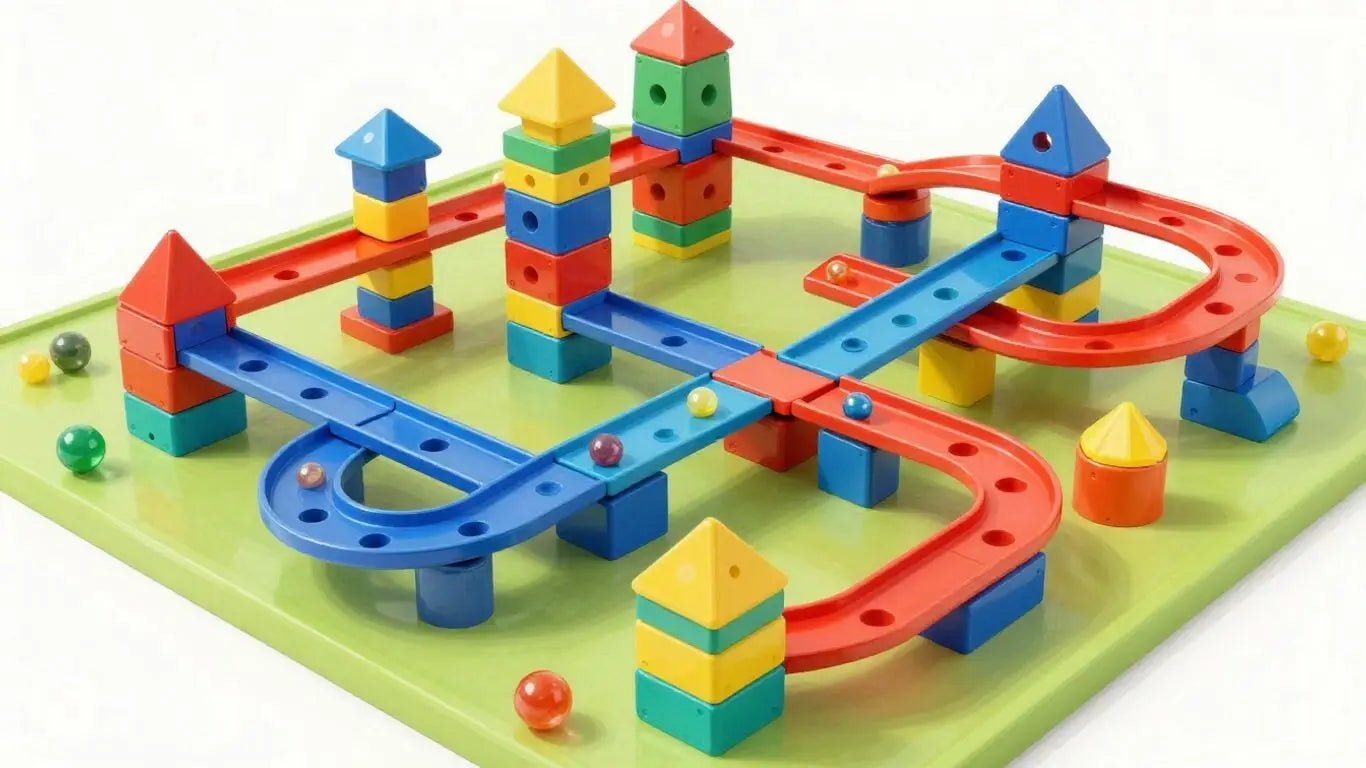
Want to get the most out of your magnetic tile marble run sessions without spending ages setting up? It's all about having a smart system in place. Think of it like prepping for a big project – a little organization goes a long way.
Building Quick-Start Track Designs
Instead of starting from scratch every time, have a few go-to track designs ready. These could be simple, reliable layouts that are easy to assemble in under five minutes. Keep these designs in a notebook or take photos so you can recreate them quickly. This is especially helpful when kids are eager to play right away. Having a few basic structures also helps introduce new players to the fun without overwhelming them. For example, a simple straight run with a few turns is a great starting point for younger kids, like those aged 3-8 who are just getting into these kinds of toys [2c29].
Preparing Go-To Storage Solutions
How you store your pieces makes a huge difference. Use clear bins so you can see what's inside. Group similar pieces together – all the straight tracks in one, curves in another, and supports in a third. This makes grabbing what you need for a quick build much faster. Some people even use drawer units or compartmentalized organizers. The goal is to minimize the time spent rummaging through a big pile of tiles.
Pre-Sorting Marbles and Track Pieces
Before you even start building, take a minute to sort your marbles. If you have different sizes or colors, keeping them separate can prevent confusion and make the game more interesting. You might want a specific marble for a specific track, or maybe you want to race different types. Similarly, if you have a lot of track pieces, a quick sort by type (straight, curve, funnel) can speed up the building process considerably.
Standardizing Starting and Finish Points
Establish consistent starting and finishing points for your marble runs. This creates a familiar framework for building and racing. You could use a specific tile as the 'start' marker and another as the 'finish' line. This standardization helps when you're timing runs or comparing different track designs. It also gives a clear objective for younger builders.
Creating Portable Play Solutions
Sometimes, you want to take the fun to a different room or even outside. Consider creating portable track modules. These are smaller sections of a marble run that can be easily detached and reattached. You could build a few of these and connect them together for a larger run, or use them individually for smaller play sessions. This flexibility means playtime can happen almost anywhere.
A well-organized setup means less time spent on logistics and more time spent on creative building and imaginative play. It transforms the experience from a chore into pure enjoyment.
Streamlining Clean-Up Routines
Efficient clean-up is just as important as efficient setup. Have a designated spot for everything. Teach kids to help put pieces back in their correct bins. Making clean-up a quick, routine part of the play session prevents pieces from getting lost and keeps your play area tidy for the next adventure. This also helps instill good habits in children.
Scheduling Regular Play Sessions
Consistency is key. Try to schedule regular times for playing with your magnetic tile marble run. This could be a daily 30-minute session or a longer weekend build. Having dedicated playtime makes it easier to maintain your organized setup and ensures the toy remains a regular source of fun and learning. These sets are great for exploring science, technology, engineering, and math concepts [8bbe].
Encouraging Group Problem Solving With Magnetic Tile Marble Run
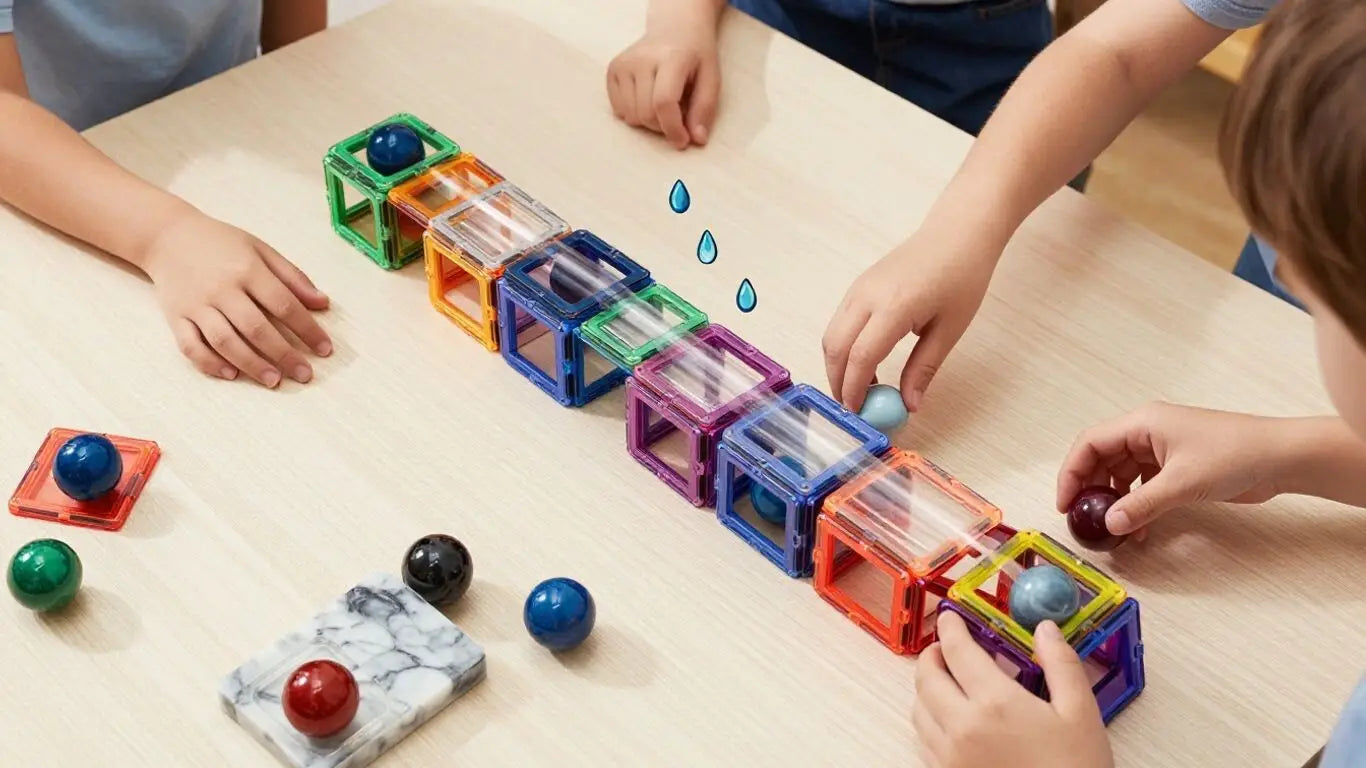
Working with others to build magnetic tile marble run structures can completely change the way kids and adults see teamwork. Group projects with these sets aren't just fun—they help everyone grow key skills together. With nationwide shipping and suitability for all U.S. projects, these activities can fit into classrooms, playrooms, or even community centers from coast to coast.
Assigning Team Building Challenges
- Divide your group into teams and give each a unique building objective—maybe fastest drop, longest run, or most creative curve.
- Encourage friendly competition to spark new ideas.
- Use magnetic tiles to set limitations, like a set number of pieces or a time constraint for an added twist.
Sometimes the best marble runs come from a pile of wild suggestions paired with just enough structure—everyone gets a say, and the result is better together.
Rotating Leadership Roles
Allow each participant to step up as the leader, even if just for one round. Try:
- Letting one person pick the design goal.
- Having another direct how pieces fit together.
- Switching every 10–15 minutes to keep everyone involved.
This helps kids and grown-ups build confidence, and no single voice dominates the project.
Practicing Active Listening Skills
- Everyone explains their vision before construction starts.
- Team members repeat back what they've heard to be sure everyone understands.
- If there's disagreement about marble speed or path, pause to clarify the issue together.
Setting Clear Objectives for Each Group
Before opening the box or picking up the first tile, the group nails down what they want to achieve:
- Are you focusing on speed or complexity?
- Will there be bonus points for creativity or teamwork?
- Do you need to fit your structure on a certain table?
Debriefing Lessons Learned from Each Build
After each building session, take a few minutes to talk about what worked (and what fell apart). Some questions to ask:
- Which design ideas worked well?
- What challenges did you run into?
- How can your next project improve?
Rewarding Collaborative Achievements
Small rewards—stickers, extra marble run pieces, or extra play time—make teamwork exciting. Remember to celebrate not just the end result but how well the group worked together.
A simple table for tracking teamwork progress:
| Session | Teamwork Goal | Outcome | What to Try Next |
|---|---|---|---|
| 1 | Communicate ideas | 3/5 success | Listen more |
| 2 | Equal roles | 4/5 success | Rotate faster |
| 3 | Creative build | 5/5 success | Add new features |
Evaluating Different Approaches in Groups
- Let teams build the same goal (such as a spiral track) in separate groups.
- Compare methods and measure marble speed, run duration, or creativity.
- Discuss as a larger group about what different teams did that worked.
For designers and homeowners, these group experiences highlight the flexibility and creative power of magnetic tile marble runs. With nationwide delivery and high-quality sets, group building becomes something anyone, anywhere in the U.S., can jump into.
For additional ideas on creative building and getting everyone involved, check out these creative magnetic tile activities.
Bring home the fun and boost collaboration with a magnetic tile marble run—order today and watch your group build, race, and problem-solve like never before!
Utilizing Magnetic Tile Marble Run in Classroom Environments
Magnetic tile marble runs are more than just a fun toy; they're a fantastic tool for the classroom. Teachers across the U.S. are finding ways to integrate these sets into their lesson plans, making learning hands-on and engaging. It's a great way to get kids thinking about how things work.
Integrating into Physics and Math Lessons
When kids build a marble run, they're naturally experimenting with physics. They learn about gravity as the marble rolls down, and acceleration as it picks up speed. You can talk about potential and kinetic energy without even using those big words. For math, you can have them count the pieces, measure the height of their towers, or calculate how many marbles can fit through a certain section. It’s a practical way to see math and science in action. Some sets, like the Everplay Marble Run Magnetic Tiles set, offer a good number of pieces to start with.
Adapting for Group Science Challenges
Classroom challenges are a great way to get students working together. You could set a goal, like building a marble run that takes at least 10 seconds for the marble to complete. Or, challenge them to create a run with a specific number of turns or loops. This encourages teamwork and problem-solving. Students have to communicate their ideas and figure out how to make their designs work.
Enhancing Classroom Engagement Levels
Let's be honest, sometimes keeping kids focused can be tough. A marble run activity can grab their attention like few other things can. It's a tactile experience that appeals to different learning styles. Instead of just reading about concepts, they're building and testing them. This active participation makes the learning stick.
Encouraging Peer Teaching Opportunities
When students work in groups, they often end up teaching each other. One student might figure out how to make a tricky loop work, and then they show their classmates. This peer-to-peer learning is really effective. It also builds confidence in the student who figured it out. You might find that some students naturally take the lead in explaining concepts.
Tracking Skill Progression with Assessments
While it might not feel like a formal test, you can observe and assess skills as students build. Are they improving their fine motor control? Can they follow multi-step instructions? Are they collaborating effectively? You can even have them draw their designs beforehand or explain their process afterward. This gives you insight into their development.
Linking to Broader Curriculum Goals
Marble runs aren't just for science class. You can connect them to art by having students decorate their tiles or design visually interesting pathways. They can be used in language arts for storytelling – maybe the marble is on a journey. For older students, you could even introduce more complex concepts like friction or momentum, perhaps using PicassoTiles Marble Run Add-On Accessories to create more intricate paths.
Incorporating Runs into School Competitions
Friendly competitions can add an extra layer of excitement. You could have a
Analyzing Unique Marble Run Accessories and Upgrades
Exploring add-ons and upgrades for your magnetic tile marble run can take your creative projects to a new level. The right accessories open up more design possibilities, make playtime more exciting, and allow for endless custom builds—perfect for architects, designers, and families who want more from their marble run experience. Accessories and specialized pieces can completely change both the look and performance of your track.
Enhancing Tracks with Transparent Tubes
Transparent tubes let you watch the marble as it speeds from one section to the next, making every run more interactive and fun. These upgrades are often compatible with major sets, offering the following perks:
- Clear views of complex pathways
- Easier troubleshooting if marbles get stuck
- Smoother, quieter marble movement
A good transparent tube set can add real excitement for both children and adults, especially when combined with other innovative pieces found in top-rated magnetic tile sets.
Adding Sound and Light Features
Imagine hearing chimes with every marble pass or seeing LED lights flicker as pieces connect—upgrades like these add more senses into play. Sound and light accessories can:
- Create engaging visual and auditory effects
- Make projects stand out for school events or home display
- Capture the attention of guests at parties
Smart upgrades like sound and light modules don’t just make your marble runs look modern—they boost engagement for users of all ages.
Utilizing Motorized Lifts and Elevators
Motorized lifts and elevators keep the marbles in motion, so you don’t need to reset them each time. That’s great for longer play sessions and demonstrating concepts like automation or energy transfer. Key features include:
- Hands-free marble returns
- Easy integration with most brand-name runs
- Opportunity to explain real-world engineering to young builders
Designing Custom Splitters and Switches
Splitters and switches bring controlled chaos to your runs, letting you decide where the marble should go next. This encourages experimentation and problem-solving. Look for:
- Manual switches for on-the-fly adjustments
- Automatic splitters triggered by marble speed
- Compatibility with expansion packs
Exploring Glow-in-the-Dark Pieces
For nighttime projects or unique event displays, glow pieces are a hit. They’re easy to add and don’t require batteries. Benefits include:
- Fun after-dark play sessions
- Great for sensory rooms or parties
- Eye-catching aesthetics for any build
Mixing in Texture and Color Variations
Don’t underestimate textured ramps, bumpy tiles, or pieces in a wild range of colors. Varied surfaces and color schemes:
- Allow clearer visual planning
- Add tactile feedback for small hands
- Support concepts like color matching and sensory integration
| Accessory Type | Fun Factor | STEM Value | Ease of Use |
|---|---|---|---|
| Transparent Tubes | ★★★★ | ★★★★ | ★★★★ |
| Sound & Light Features | ★★★★ | ★★★ | ★★★★ |
| Motorized Lifts | ★★★★ | ★★★★ | ★★★ |
| Glow-in-the-Dark Pieces | ★★★★ | ★★★ | ★★★★★ |
Evaluating Aftermarket Accessory Packs
When it comes to aftermarket packs, quality matters. Pick sets made with high-quality magnets and safe plastics, especially for family use and nationwide shipping to U.S. projects. Be sure to:
- Read compatibility lists before purchasing add-ons
- Check user reviews and expert recommendations for marble run accessories
- Stick with trusted brands to avoid fitment or durability issues
Ready to upgrade your magnetic tile marble run with smart accessories? These extras can make playtime fresh, boost learning, and impress guests at your next build session. Consider mixing and matching unique pieces when planning your next project. Looking for more advice or premium picks? Reach out today for project consultations and direct shipping—anywhere in the USA.
Looking to make your marble run even more exciting? We've got some cool extras and upgrades that can take your game to the next level. From special tracks to fun add-ons, these accessories can really change how your marbles roll. Want to see what's out there to make your marble run the best ever? Check out our website for all the awesome options!
Keep Building, Keep Playing
So there you have it. Magnetic tile marble runs are more than just a toy; they’re a fantastic way to get creative and build some seriously cool stuff. Whether you’re making a simple track or a giant, winding maze, the fun just keeps going. It’s a great way to spend time, maybe with the kids, or even just on your own when you need a break. The possibilities are pretty much endless, and that’s the best part. So grab those tiles, start building, and see what amazing marble runs you can come up with. Happy building!
Frequently Asked Questions
What exactly are magnetic tile marble runs?
Magnetic tile marble runs are awesome building toys where you connect magnetic tiles to make cool paths for marbles to roll through. Think of it like building your own mini roller coaster, but with magnets holding everything together!
How do the magnets work to keep the structure up?
The tiles have magnets built into their edges. When you put them together, the magnets snap and hold the pieces firmly. This makes your marble run strong enough to stand on its own and guide the marble without falling apart.
Is this toy good for learning?
Totally! It's super fun and also helps you learn about science, like how gravity makes the marble go down and how different slopes change its speed. It's a great way to learn STEM stuff without even realizing it.
What age is this toy best for?
Most magnetic tile marble runs are great for kids aged 3 and up. Younger kids might need a little help from an adult, but older kids can build really complex runs all by themselves.
Can I build really tall marble runs?
You can build them as tall as you want, as long as you make sure they are stable! Sometimes you need to add extra tiles as supports, like building a strong base, to keep your tall creation from tipping over.
What happens if the marble gets stuck?
If a marble gets stuck, don't worry! You can usually just reach in and gently nudge it along, or you might need to adjust a tile or two to make the path smoother. It's all part of figuring out how to make your run work perfectly.
Are there different brands, and do they work together?
Yes, there are many brands! Some brands make their tiles so they can connect with other brands, which is awesome because you can mix and match to build even bigger and more amazing runs.
How do I clean the magnetic tiles?
Cleaning is easy! Just wipe them down with a damp cloth. If they get really dirty, you can use a mild soap and water, but make sure to dry them completely before putting them away so the magnets don't get rusty.
Can multiple kids play with this at once?
Absolutely! Magnetic tile marble runs are perfect for playing with friends or siblings. You can work together to design and build a super cool run, which is a great way to learn teamwork.
What kind of marbles work best?
Most sets come with their own marbles. Standard-sized glass marbles usually work best. Avoid really tiny or unusually shaped marbles, as they might not roll smoothly or could get lost easily.
Can I add special pieces to my marble run?
Yes! Some sets have special pieces like spinners, tunnels, or jump ramps that make the marble run even more exciting. You can also get creative and add things from around the house, like cardboard tubes, to make your run unique.
Where should I store my magnetic tiles when I'm done playing?
It's best to store them in a box or bin. You can even sort them by color or shape to make it easier to find the pieces you need next time. Keep them in a dry place to protect the magnets.