







Key Takeaways
Carrara white marble mosaic brings a light, classic foundation to kitchens, bathrooms, entryways, and accent walls. The best result comes from balancing the stone’s natural variation with a carefully chosen pattern, finish, grout color, and installation plan.
- Carrara’s white background and gray veining create a calm, timeless look.
- Pattern, finish, tile size, and grout can shift the mood of the same marble.
- Samples help reveal real veining, shade variation, and surface texture.
- Proper preparation, sealing, and stone-safe cleaning support long-term beauty.
- Ordering the right quantity and confirming supplier details helps a project run smoothly.
What makes Carrara white marble mosaic distinctive
Carrara white marble mosaic has a quiet elegance that works across traditional, transitional, and contemporary interiors. Its pale surface reflects light, while natural gray movement gives a wall or floor enough character to feel finished rather than flat. Because small pieces repeat across a sheet, the material can create both detailed ornament and a restrained field. It is a natural stone choice with a long visual life, provided the application and care plan suit marble.
The white background and natural gray veining
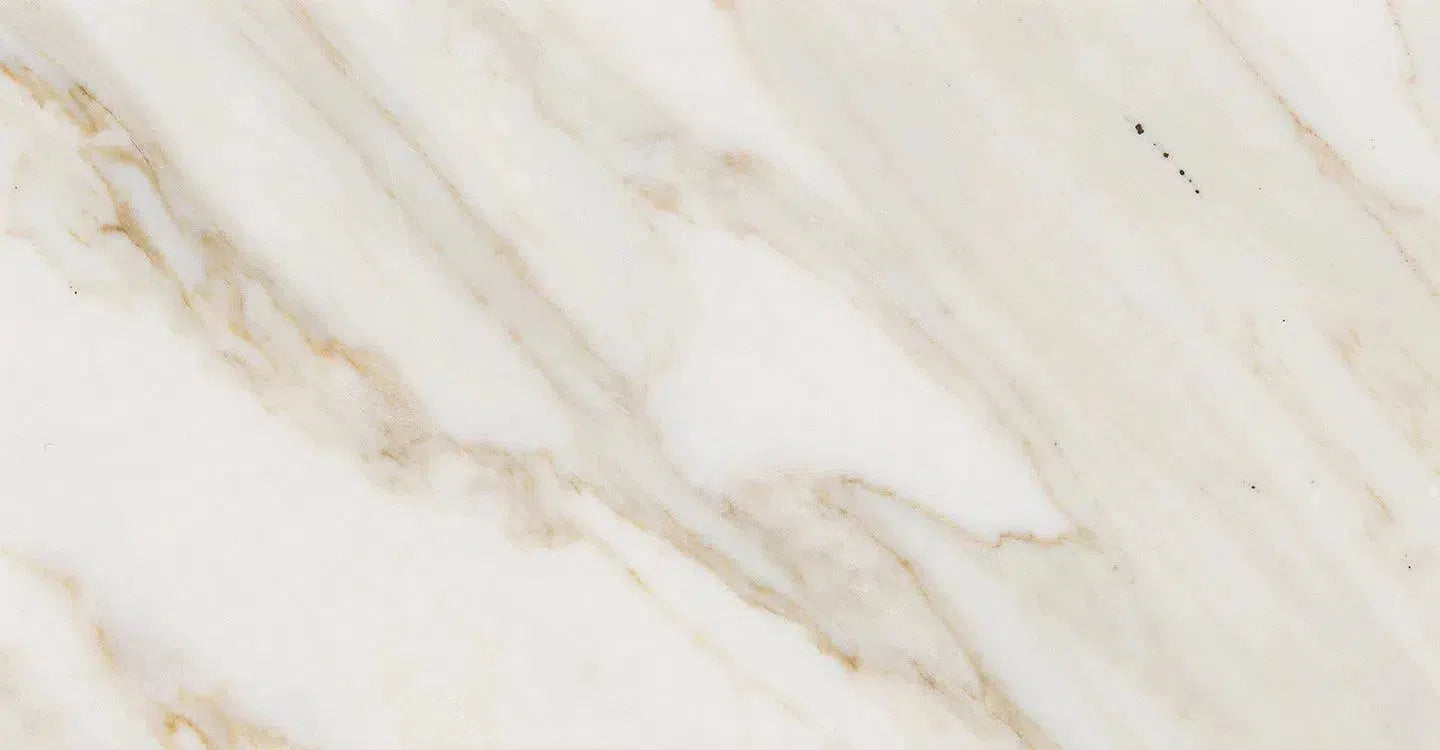
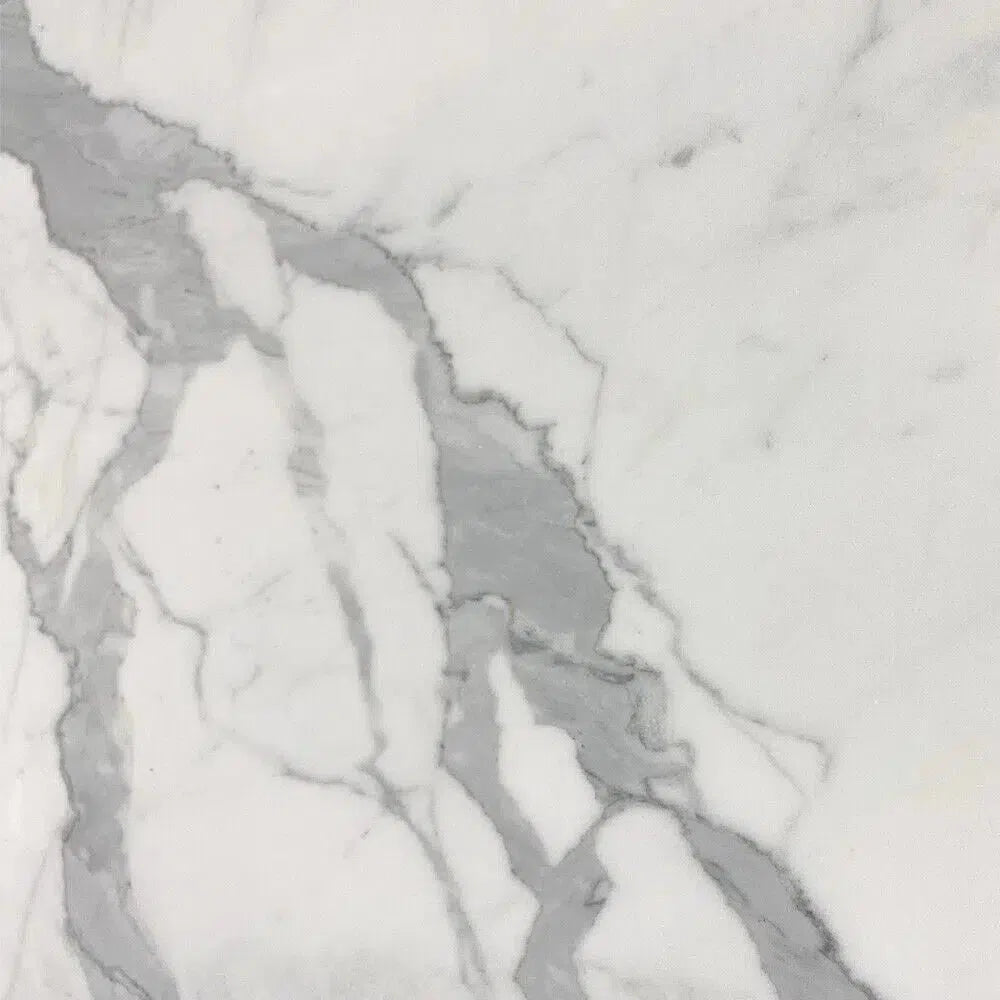
The defining look is a soft white ground crossed by delicate gray veining. Some pieces may be nearly clear and uniform, while others carry more visible movement, so a finished installation feels layered instead of mechanically repeated. That contrast is especially attractive behind warm wood cabinetry, against brushed metal fixtures, or beside painted walls in quiet neutral colors. The surface can feel crisp in a polished finish and softer in a honed one.
How Carrara compares with other white marbles
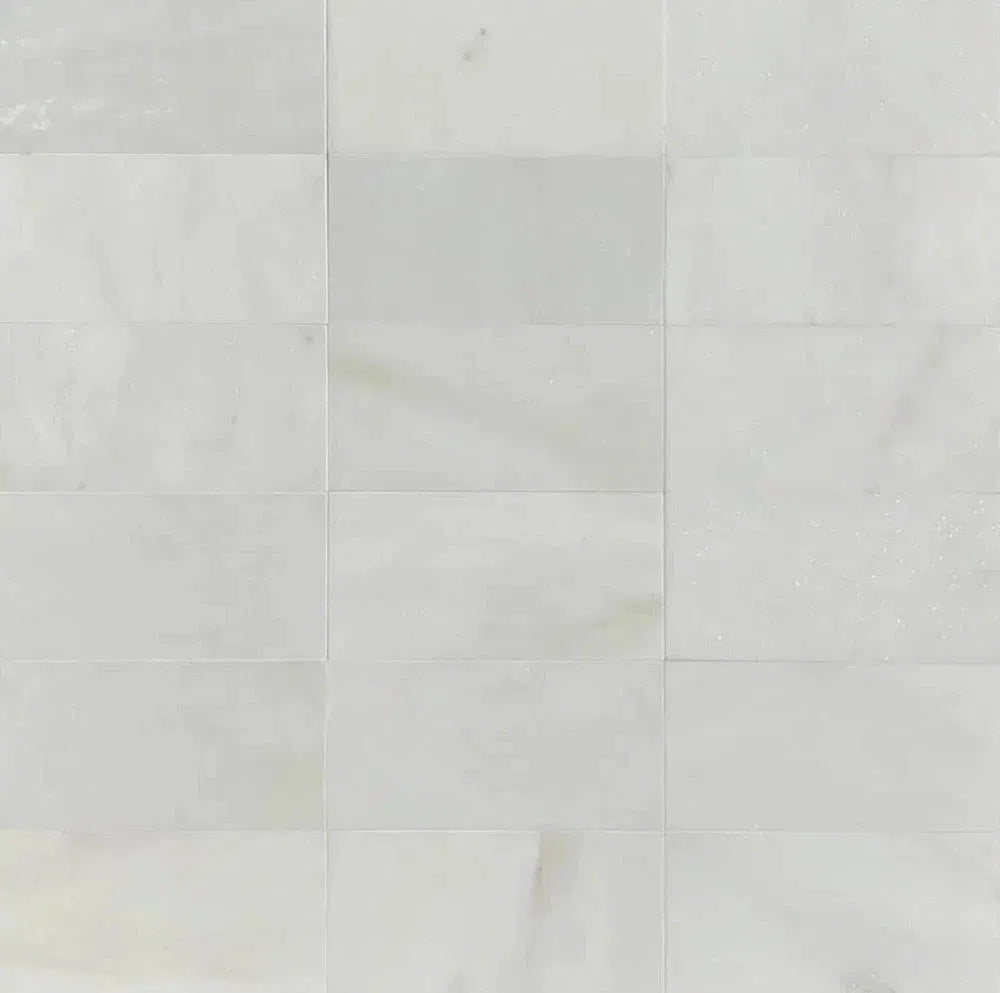
White marbles can look similar in a small photograph but differ in background tone, vein strength, and overall visual drama. Carrara is generally appreciated for a balanced, understated appearance rather than an intensely graphic pattern. A designer seeking stronger contrast may prefer a marble with bolder movement, while a homeowner wanting a calmer backdrop may find Carrara easier to live with. Comparing physical samples is more useful than relying on names alone.
The Carrara marble guide is a helpful starting point when considering formats, surface character, and everyday care. It also reminds buyers that marble can etch from acidic liquids and that polished marble flooring may be slippery in wet areas—practical details worth considering before a selection is final.
Why natural variation makes every mosaic unique
Natural stone is not manufactured to look identical from one piece to the next. Differences in shade, clouding, and veining are part of the material’s appeal, but they should be reviewed before installation so the layout feels intentional. Open several sheets, mix pieces from different boxes, and identify especially light or dark sections before adhesive is applied. This simple preview can prevent an unexpected cluster of similar tiles.
A sample also gives a better sense of how the stone interacts with the room’s daylight. Morning sun, warm bulbs, cabinet colors, and grout can all change its appearance. The White Carrara Marble tiles reference similarly highlights natural differences in color, shade, and veining, which is why an in-person or mailed sample is a worthwhile step.
Common mosaic patterns and formats
Mosaic sheets make detailed layouts more approachable because individual pieces are arranged on a backing. Popular choices include herringbone, basket weave, hexagon, arabesque, chevron, and simple straight-joint formats. The pattern affects more than decoration: a small mosaic can add rhythm to a compact niche, while a larger repeating unit may feel calmer across a broad wall. Edge pieces, borders, and transitions should be considered at the same time.
For a closer look at the range of options, Bianco Carrara Marble Mosaic Stone includes basketweave, hexagon, and chevron examples as well as polished and honed finishes. The visual language may change with each format, but the underlying design principle remains the same: choose a pattern that supports the room rather than competing with every other surface.
How to choose the right Carrara mosaic
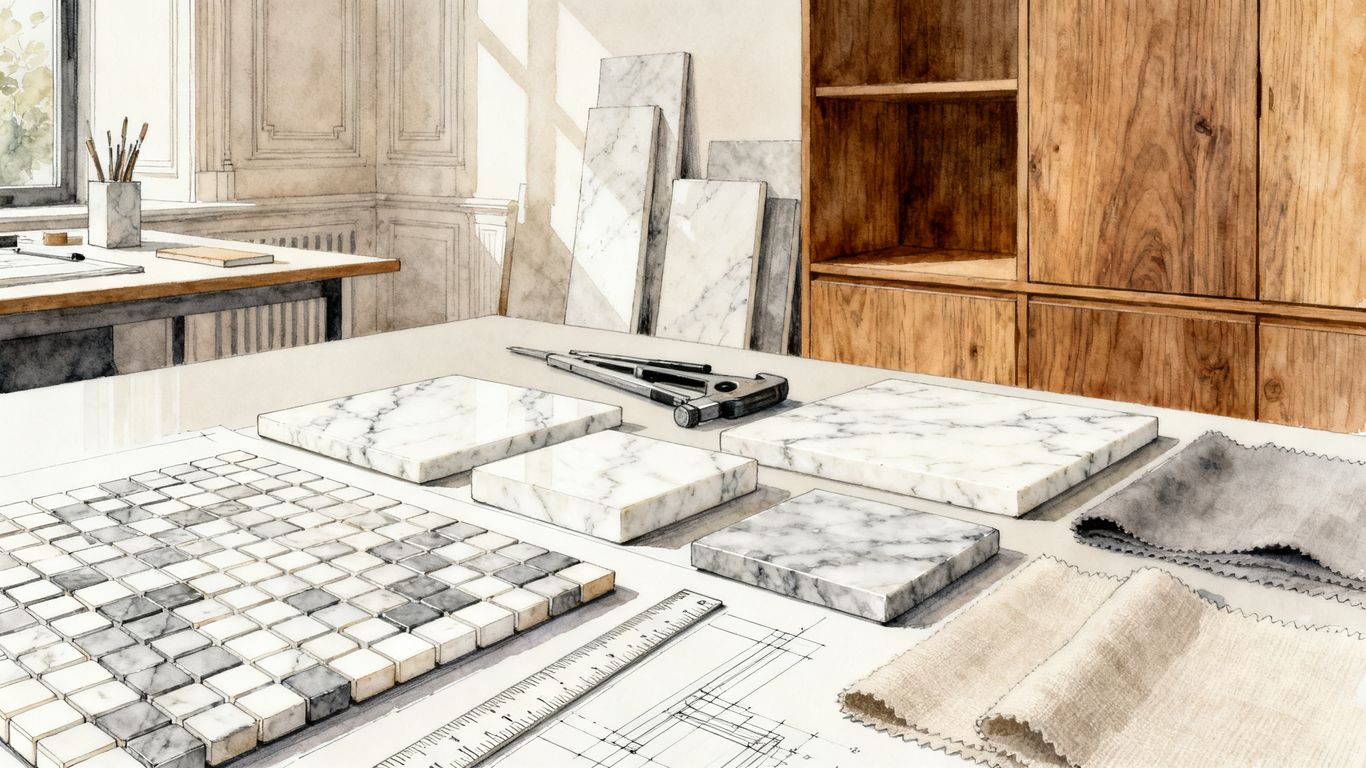
Selecting a Carrara mosaic is easier when the decision is broken into a few visible qualities. Start with the atmosphere you want, then consider how much movement the pattern should introduce and how the surface will be touched, cleaned, or walked on. A kitchen backsplash may prioritize easy visual coordination, while a shower floor needs careful attention to traction and installation details. The most attractive option is also the one that fits the room’s practical demands.
Matching the pattern to your design style
A narrow herringbone can add movement to a classic kitchen without feeling ornate, while a basket weave has a more established architectural character. Hexagons and arabesques bring a decorative outline that can become the focal point of a small bathroom wall. Straight layouts tend to feel cleaner and quieter, especially when the marble already has visible veining. Use the room’s cabinetry, hardware, and trim as cues rather than choosing a pattern in isolation.
Selecting polished, honed, or tumbled finishes
Polished marble has a reflective surface that can make pale stone appear brighter and more formal. Honed marble is matte and tactile, with a quieter appearance that often suits relaxed or contemporary rooms. Tumbled finishes soften edges and add an aged, textured quality. The finish changes how light moves across the mosaic, so view it under lighting similar to the project whenever possible.
Choosing sheet size, tile dimensions, and layout
Sheet dimensions affect handling, alignment, and the number of seams visible across the installation. Smaller pieces can follow gentle curves and make shower floors easier to slope, but they also create more grout lines. Larger mosaic units may read as calmer and can simplify broad wall areas. Confirm nominal dimensions, backing type, grout-joint size, and coverage per carton before ordering.
Evaluating color consistency and material quality
Quality review should include more than whether the stone looks white in a listing photo. Check that pieces are securely attached to the sheet, edges are reasonably consistent, and the finish is appropriate for the intended location. Ask how much variation is expected between lots and whether the full order can come from one lot. A clear understanding of these details supports a more confident selection and reduces surprises during installation.
A simple comparison can help when several samples are competing for the same room:
| Decision point | What to inspect | Why it matters |
|---|---|---|
| Background tone | Cool white, warm white, or mixed shades | Coordinates with paint, cabinets, and fixtures |
| Veining | Fine, moderate, or pronounced movement | Sets the visual energy of the installation |
| Finish | Polished, honed, or tumbled texture | Changes reflection, touch, and overall mood |
| Pattern | Herringbone, basket weave, hexagon, or field | Determines rhythm and visual scale |
After comparing these elements together, choose the sample that still feels right beside the project’s permanent materials. A beautiful tile can feel wrong if its undertone clashes with the countertop or wall color.
Where to use Carrara white marble mosaic
Carrara mosaic is adaptable because it can act as a quiet background or a detailed decorative surface. It suits residential rooms where a small amount of natural stone can add refinement without overwhelming the architecture. It also works in selected commercial interiors, especially where a classic, light-colored finish supports the overall experience. Application-specific requirements still matter, particularly around water, slip resistance, maintenance, and impact.
Kitchen backsplashes and cooking areas
A Carrara backsplash can brighten the wall between counter and cabinet while introducing gentle movement behind cooking and preparation areas. Herringbone or brick-inspired arrangements add definition, whereas a simple hexagon or straight-joint sheet keeps the composition more restrained. Plan outlets, corners, cabinet returns, and the transition to the countertop before setting tile. A sample placed beside the actual counter is more revealing than one viewed alone.
Surfaces Galore describes its Carrara White mosaics as suitable for backsplashes and accent areas, making this a natural setting for the material. Its broader Carrara White collection also includes tiles in various sizes and finishes, so a mosaic can be coordinated with larger formats elsewhere in the room.
Bathroom walls, shower floors, and niches
On bathroom walls, pale marble can make a compact room feel brighter and more open. A mosaic is particularly useful in a niche or border, where its pattern creates a small moment of detail without covering every surface. Shower floors require a product and installation approach appropriate for wet conditions, including a properly sloped, sound substrate and a finish selected with traction in mind. Confirm suitability with the tile supplier and installer before purchase.
The White Carrara Marble Leaves Ball Polished Mosaic Tile example illustrates how a distinctive pattern can be used on walls, backsplashes, and decorative accents. Its polished character may be attractive for those locations, while a shower floor deserves a separate review of surface texture and local installation requirements.
Entryways, feature walls, and fireplace surrounds
In an entryway, Carrara mosaic can establish a welcoming threshold with a relatively small footprint. On a feature wall or fireplace surround, it provides texture and pattern without requiring a strong color statement. Keep the surrounding materials simpler when the mosaic has a busy geometry, and use trim to create a deliberate ending at corners and openings. Heat, moisture, and local code considerations should be reviewed for fireplace applications.
For a more traditional direction, a border around a field tile can frame the installation like architectural millwork. In a contemporary setting, the same marble may work better as a single carefully placed panel, allowing the white background and gray lines to remain the main visual event.
Accent applications in commercial interiors
Boutique hospitality spaces, salons, offices, and retail interiors can use Carrara mosaic at reception desks, washroom walls, bar backs, or small feature zones. The material offers a recognizable natural-stone finish while allowing a designer to control cost and visual emphasis through scale. Commercial projects should account for cleaning schedules, traffic, replacement stock, and the performance requirements of the specific site. A mockup is especially valuable when several viewing distances are involved.
The stone can support a polished, welcoming atmosphere, but it should not be selected solely for appearance. The maintenance plan, substrate, and expected contact with water or equipment need to be agreed upon before procurement.
Design ideas for a timeless marble installation
Timeless design does not mean every room must look formal. Carrara can feel traditional with a woven pattern, contemporary in a clean geometric layout, or warm and relaxed when paired with natural wood. The strongest installations usually repeat one or two colors from the surrounding palette instead of introducing a separate shade for every surface. Let the marble’s variation provide interest, then give the eye somewhere quiet to rest.
Herringbone and basket-weave layouts
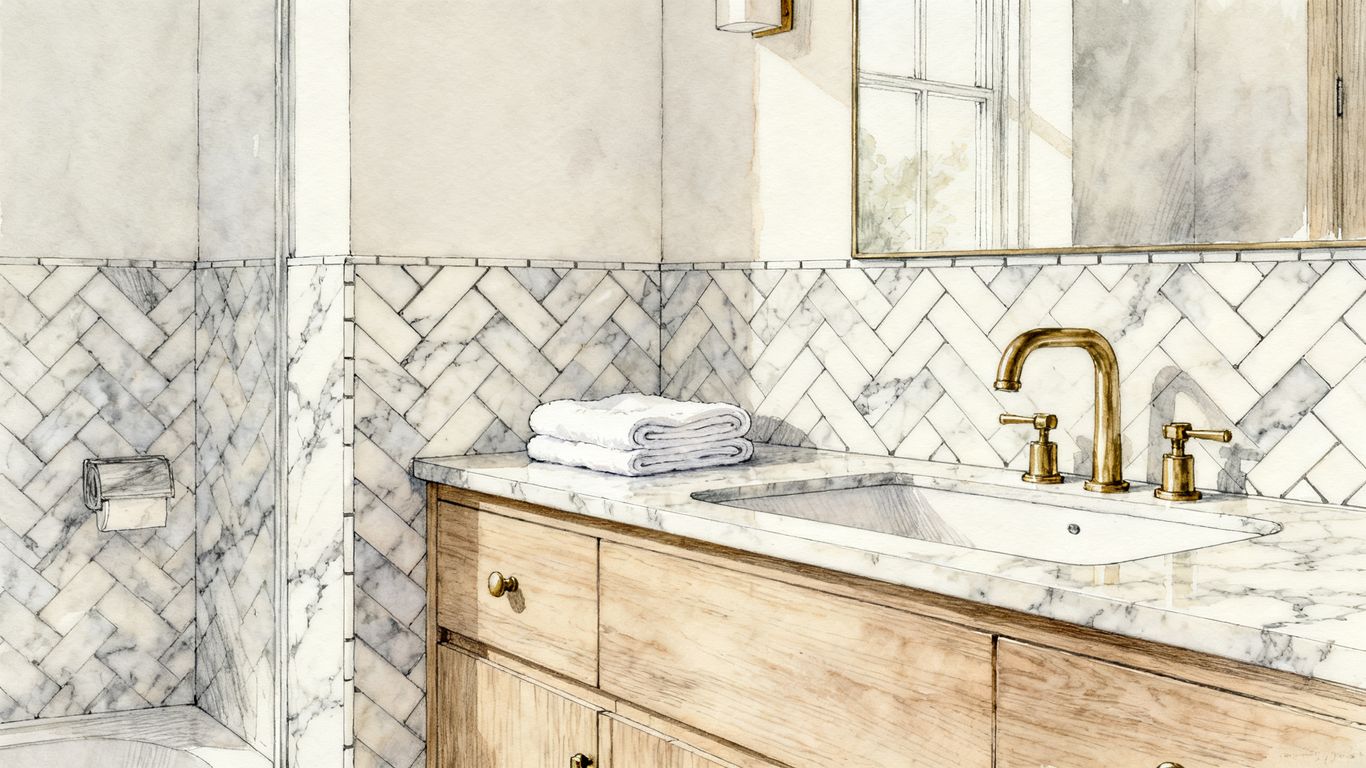
Herringbone creates directional movement and can make a backsplash feel taller or wider depending on its orientation. Basket weave has a more anchored, architectural quality and pairs naturally with classic cabinetry, framed mirrors, and traditional trim. Both patterns benefit from careful sheet alignment because even small shifts can become visible across a long run. A contrasting dot or accent stone can define the pattern, though plain Carrara keeps the result softer.
Hexagon, arabesque, and geometric patterns
Hexagons offer a familiar geometry that can be scaled from delicate to bold. Arabesque shapes introduce a curved, almost fabric-like rhythm, while more angular geometric designs suit rooms with modern fixtures and simple cabinetry. Because these patterns have strong outlines, grout color deserves as much attention as the marble itself. A close grout can quiet the pattern; a contrasting grout can make every shape more prominent.
For another visual direction, marble design ideas can help frame a conversation about formats and installations for kitchens, baths, and home interiors. The useful takeaway is not to copy a display exactly, but to notice how pattern scale changes when it moves from a small sample to a full wall.
Pairing Carrara with dark or contrasting stone
Dark stone can sharpen Carrara’s pale background and make a border, niche, or floor transition feel intentional. A black accent may create a formal, graphic effect, while a deep gray keeps the contrast gentler. Use the darker material in measured areas so the room does not become visually divided into too many competing zones. Repeating the accent in hardware or furnishings can make the palette feel connected.
A checkerboard-inspired floor or border can also bring historic character to an entryway or bathroom. The contrast should be tested under the room’s actual lighting, since dark grout and darker stone may appear more dominant than expected in a small space.
Creating a bright, minimalist interior
For a minimalist room, choose a restrained pattern, a close grout color, and a limited surrounding palette. White cabinetry, pale oak, matte fixtures, and simple lighting allow the gray veining to become the detail rather than adding another decorative layer. Large uninterrupted areas can benefit from a mosaic used selectively in a backsplash, niche, or vanity wall. The result feels composed when the eye can move easily from one surface to the next.
A design video can be useful for seeing how sheet patterns, grout lines, and finish reflect light at different angles. Still, a physical sample remains the better guide to the exact stone being considered.
Installation considerations for marble mosaic tile
A successful marble mosaic installation begins before the first sheet is opened. Natural stone reveals uneven walls, awkward corners, and inconsistent planning more readily than a forgiving painted surface. Measurements, layout, substrate preparation, and material inspection should therefore happen in sequence. The tile, setting materials, and maintenance expectations need to be considered as one system.
Preparing the surface and planning the layout
The surface should be clean, sound, suitably flat, and appropriate for the selected setting method. Establish a centerline or another logical starting point, then dry-lay sheets to see where cuts will fall at corners, cabinets, niches, and transitions. Avoid ending with narrow slivers whenever the layout can be shifted slightly. Mark plumbing penetrations and outlets early so the pattern remains balanced.
Before installation, inspect sheets in good light and separate pieces that may need to be distributed through the field. This is the moment to confirm that the delivered material matches the approved sample and that there is enough stock for cuts and future repairs.
Choosing the right mortar, grout, and edge details
Use setting and grouting products recommended for natural stone and the specific substrate, moisture exposure, and tile format. White or light-colored mortar is commonly considered where a pale stone could be affected by show-through, but the installer should confirm compatibility and manufacturer instructions. Grout width and color influence whether the pattern recedes or stands out. Edges should be finished with a matching trim, a polished exposed edge, or a planned transition to another material.
Do not treat grout as an afterthought. It fills a large portion of a small-format mosaic and can either unify the surface or outline every individual piece.
Managing cuts, joints, and sheet alignment
Mosaic sheets are convenient, but their backing does not remove the need for careful placement. Stagger sheet joints where appropriate, vary the meeting points, and check that repeating shapes do not create visible breaks. Cuts should be positioned in less prominent locations when possible, with factory edges reserved for exposed or highly visible areas. Wipe away setting material before it hardens in the joints.
Work in manageable sections and repeatedly step back to view the installation from the room’s normal approach. Small corrections made early are much easier than trying to disguise a pattern that has drifted several rows later.
When to work with a professional installer
A professional is especially valuable for large rooms, complex borders, shower assemblies, uneven substrates, or layouts that require many visible cuts. Marble can chip, stain, or crack when handled with unsuitable tools or pressure, and moisture-related failures often begin below the tile surface. Ask for references, confirm experience with mosaics and natural stone, and agree on the layout before work begins. The installer should also explain curing, sealing, and when the finished area can be used.
For a small backsplash, a careful experienced remodeler may be sufficient. For a wet room or high-visibility architectural installation, skilled preparation is usually worth prioritizing over a rushed schedule.
Care and long-term maintenance
Marble develops its character through use, but it still benefits from thoughtful care. The goal is not to keep every square inch untouched; it is to limit avoidable staining, etching, standing moisture, and harsh cleaning. A simple routine is easier to maintain than an elaborate one that gets ignored. Always follow the stone-care product manufacturer’s directions and test unfamiliar products in an inconspicuous area.
Sealing Carrara marble before and after installation
A penetrating sealer may help reduce the absorption of spills, depending on the stone, finish, and location. Sealing does not make marble stain-proof or prevent acid etching, and it should not replace proper cleaning. The installer or stone-care professional can advise whether the mosaic needs sealing before grouting, after installation, or at a later maintenance interval. Keep the surface clean and dry enough for the product to bond correctly.
Because mosaics contain many grout joints, the maintenance plan should address both the marble and the grout. Record the sealer used and the installation date so future care is based on the actual product rather than guesswork.
Cleaning without damaging the stone
Use a soft cloth, microfiber mop, or non-abrasive brush with a cleaner labeled for natural stone. Blot spills instead of rubbing them across a larger area, and rinse away residue that could leave a film. Avoid abrasive powders, rough pads, and acidic household products such as vinegar or lemon-based cleaners. A mild, regular routine is safer than occasional aggressive scrubbing.
On shower mosaics, remove surface water after use when practical and keep ventilation working. This helps the room dry and makes it easier to notice a developing grout or moisture problem.
Preventing stains, etching, and moisture problems
Acidic liquids can dull or etch marble even when a sealer is present. Cooking oils, cosmetics, colored bath products, and rust-producing metal objects may also require quick attention. Use trays, mats, and coasters where they make sense, and address plumbing leaks promptly. In wet areas, correct slope, drainage, ventilation, and grout condition matter as much as the tile’s appearance.
A useful household routine includes these small habits:
- Wipe spills promptly, especially colored or acidic liquids.
- Use pH-neutral stone cleaner rather than general-purpose sprays.
- Keep shower surfaces ventilated and allow them to dry.
- Place protective pads beneath metal or ceramic accessories.
These steps will not prevent every mark, but they reduce the daily conditions that cause avoidable damage. If an etch or stain appears, identify the cause before applying a treatment.
Repairing chips, discoloration, and grout issues
Small chips may be repairable with a color-matched stone filler, while badly damaged pieces may need replacement. Keep a few extra mosaic sheets from the original lot because a close match can be difficult later. Discolored grout may respond to careful cleaning or a professional color treatment, but persistent darkening can indicate moisture behind or beneath the installation. Do not simply cover a recurring symptom without checking its source.
A stone-care professional can distinguish surface residue from etching, staining, or a failed joint. Early advice is often less disruptive than waiting until a small repair becomes a larger replacement.
How to buy Carrara white marble mosaic with confidence
Buying well is partly a design exercise and partly a logistics exercise. The product must look right, cover the area, arrive in usable condition, and be supported by clear information. Ask questions before payment rather than assuming every white marble mosaic has the same dimensions or finish. For U.S. projects, confirm delivery timing, packaging, freight access, and who to contact if cartons arrive damaged.
Confirming tile dimensions, finish, and coverage
Request the nominal sheet size, individual piece dimensions, thickness, finish, grout-joint size, and square-foot coverage per box. Confirm whether dimensions are nominal and whether the backing is mesh, paper, or another format. Ask whether the product is recommended for walls, floors, wet areas, or only decorative use. These details affect both the material estimate and the installation method.
If the design includes trim, borders, or a contrasting accent, confirm those quantities separately. A mosaic can look complete in a photograph while still requiring additional edge material to finish the real room.
Ordering samples and reviewing natural variation
A sample should be viewed beside the countertop, paint, cabinet door, metal finish, and flooring that will remain in the room. Turn it in different directions to see how the veining changes, then compare several pieces if the order will cover a large area. Ask whether the sample represents the current lot and how much variation may occur. This is particularly helpful when the goal is a calm, nearly uniform installation.
The sample is also a chance to assess texture. Run your hand across polished, honed, or tumbled surfaces and consider how each will feel in the intended location. A finish that looks attractive online may have a different presence at full scale.
Calculating material quantities and waste
Measure each area separately, account for openings, and add an overage that reflects the pattern, number of cuts, fragility of the material, and potential future repairs. Complex layouts generally need more allowance than a simple straight installation. Keep the calculation in square feet and boxes, then round up to complete cartons. Verify the supplier’s coverage figure rather than relying on a generic tile calculator.
For large or phased projects, try to purchase enough material from one lot. Mixing lots can introduce additional shade or veining differences, even when the product name is identical.
Comparing quality, pricing, shipping, and supplier support
Price should be considered alongside stone consistency, packaging, availability, lead time, and the supplier’s ability to answer application questions. Ask how cartons are protected in transit, what happens when material arrives damaged, and whether replacement sheets can be obtained later. Nationwide shipping can be useful for U.S. projects, but delivery terms and unloading responsibilities should be clear before the order leaves the warehouse.
The Carrara Marble Collection reference is useful for comparing the appeal of stocked Carrara formats and nationwide availability. For buyers who want a distinctive decorative option, Carrara White Marble Mosaic can be an action-oriented next step when reviewing product choices and requesting assistance.
A supplier’s wider catalog may also reveal whether its staff understands natural-stone coordination. Surfaces Galore presents Carrara White tiles, slabs, mosaics, backsplashes, and shower-floor tile as part of its collection, giving designers and homeowners several ways to carry a consistent material through a project. Its custom mosaic information also describes options for backsplashes, walls, floors, and custom designs, though any custom scope, timing, and finish should be confirmed for the specific order.
Conclusion
Carrara white marble mosaic remains appealing because it combines a luminous white background, natural gray movement, and enough pattern flexibility for both classic and modern rooms; with a physical sample, a thoughtful layout, suitable installation, and regular stone-safe care, it can become a lasting detail rather than a passing trend. For help exploring natural stone surfaces, review the available collection and choose the format that fits your project, budget, and installation plan.
Frequently Asked Questions
Is Carrara white marble mosaic suitable for a kitchen backsplash?
Yes, it is commonly considered for kitchen backsplashes because its pale background and gray veining coordinate with many cabinet, countertop, and hardware colors. Confirm the finish, cleaning requirements, and installation details for the specific product.
Can Carrara mosaic be used on a shower floor?
Some Carrara mosaics may be appropriate for shower floors, but suitability depends on the product, finish, tile size, substrate, drainage, and local installation requirements. Ask the supplier and installer to confirm the selection before purchase.
What is the difference between polished and honed Carrara marble?
Polished marble has a reflective surface and a more formal appearance, while honed marble has a matte, softer visual quality. The finish also changes how the stone responds to light, touch, cleaning, and visible wear.
Does Carrara marble vary from piece to piece?
Yes, natural Carrara marble can vary in white tone, gray veining, clouding, and shade. Reviewing samples and opening several sheets before installation helps create a balanced distribution of variation.
What grout color works best with white marble mosaic?
A grout close to the marble’s background generally creates a quieter, more blended surface. A darker or contrasting grout makes the individual pattern more visible, so the best choice depends on the desired level of definition.
Does Carrara marble need to be sealed?
A penetrating sealer may be recommended for some applications, but it does not make marble stain-proof or prevent etching. The appropriate product and schedule depend on the stone, finish, location, and manufacturer guidance.
How much extra mosaic tile should be ordered?
The right allowance depends on the room shape, pattern, number of cuts, material fragility, and whether replacement pieces should be saved. Measure carefully, round up to full cartons, and ask the supplier or installer to review the estimate.