









Key Takeaways
Choosing natural stone for a fireplace means balancing heat, durability, maintenance, and the visual character of the room. The best surround is one that suits both the architecture and the way the fireplace will be used.
- Compare stone types by appearance, porosity, durability, and maintenance needs.
- Select color and finish with the entire room—not just the firebox—in mind.
- Confirm clearances, substrates, and local code requirements before installation.
- Order carefully, allowing for cuts, waste, and natural variation between pieces.
- Treat sealing and routine cleaning as part of the design investment.
Why natural stone is a strong choice for a fireplace
A fireplace is both a working feature and a visual anchor, so its surround needs to perform while still feeling at home in the room. Natural stone offers depth, texture, and variation that manufactured surfaces often struggle to reproduce. With the right material and installation plan, a natural stone for fireplace project can remain attractive for years.
Heat resistance and long-term durability
Stone is a practical choice around a fireplace because it is hard, stable, and able to tolerate the warmth produced by many properly installed fireboxes. That does not mean every stone, adhesive, or grout is automatically suitable for heat exposure. The firebox design, distance from the opening, and installation system all matter. Ask the installer to confirm that the selected materials are rated for the intended application.
Natural variation and one-of-a-kind character
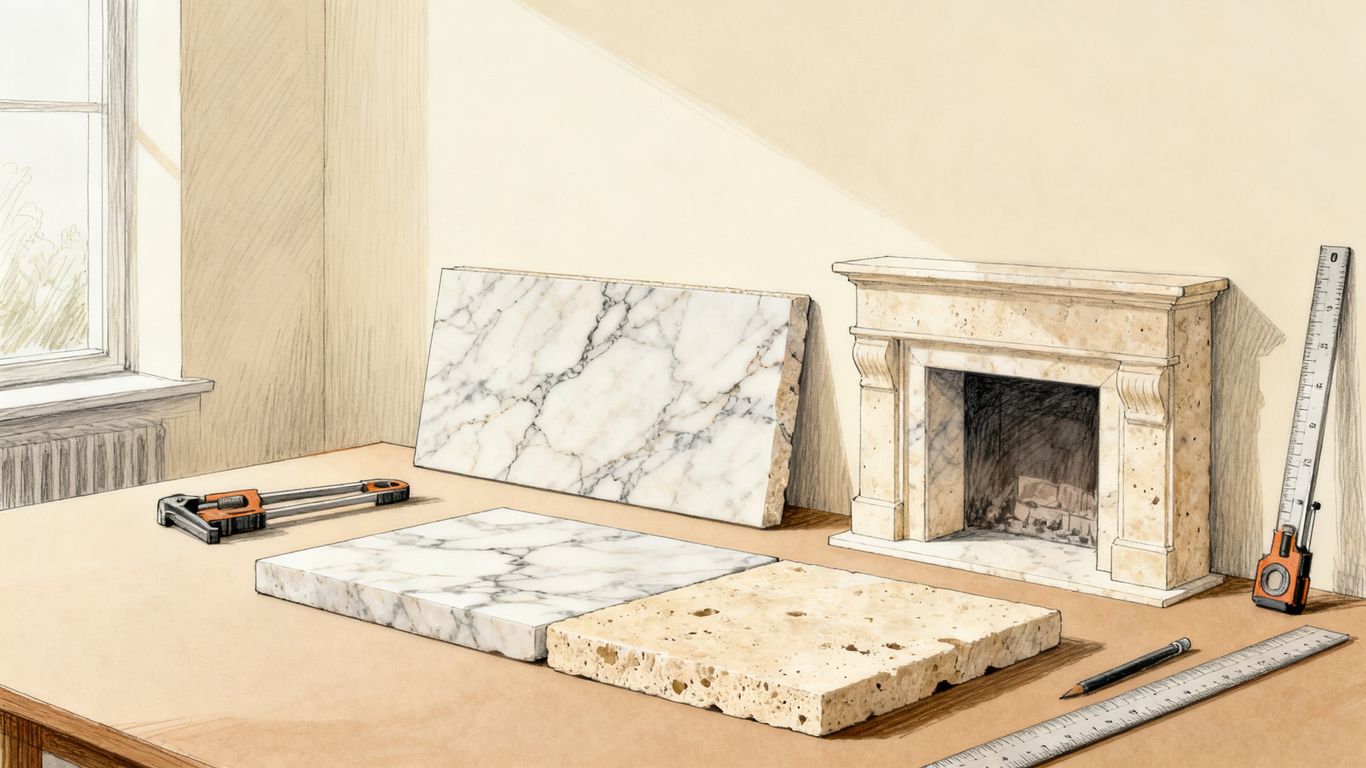
No two slabs or batches of tile are exactly alike. Veins shift, fossils appear in unexpected places, and small changes in tone give a surround a sense of age and authenticity. This variation is part of the appeal, but it should be reviewed before fabrication so the most attractive movement lands where it can be seen. A sample is useful, though a larger group of pieces gives a more realistic impression.
How stone complements different interior styles
A quiet limestone surround can soften a modern room, while strongly veined marble can give a traditional mantel a more formal presence. Travertine brings warmth and texture to rustic interiors, and dark marble can create a crisp contrast against pale walls. The most successful designs repeat one or two colors already present in the room rather than introducing an unrelated shade.
Factors that affect performance and longevity
Stone selection is only one part of the result. Moisture, repeated heating and cooling, impact from firewood, cleaning habits, and the quality of the substrate can all affect appearance over time. Good preparation matters as much as the surface material itself, especially where large slabs or heavy trim pieces are involved.
Choosing the best natural stone for your fireplace
There is no universal winner among marble, travertine, limestone, granite, and other stones. Each offers a different mix of color, texture, hardness, porosity, and price. Start by deciding how formal or relaxed the room should feel, then narrow the choices according to maintenance and installation requirements.
Marble for refined, luxurious surrounds
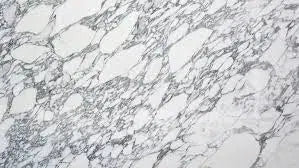
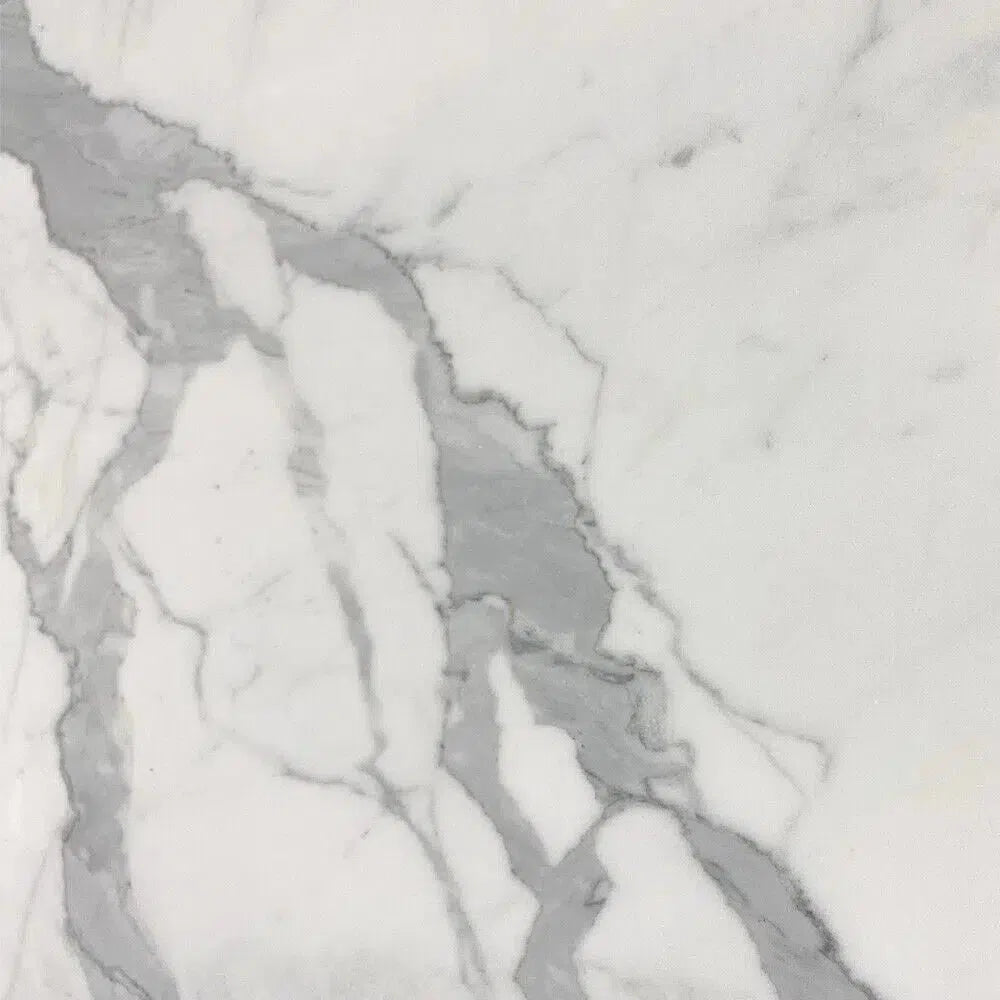
Marble is a natural fit for an elegant surround because its veining can read as subtle, dramatic, or almost graphic. Carrara White, for example, brings a pale background and gentle gray movement that works with both classic and contemporary rooms. Carrara White is presented by Surfaces Galore as a natural stone surface for renovation and design projects, and its clean appearance makes it a familiar starting point for fireplace planning.
Travertine for warmth and old-world texture
Travertine has a softer, more earthy personality than many marbles. Its pores, layered color, and gently weathered surface can make a new fireplace feel established, especially when paired with wood beams or plaster walls. Filled and honed versions look more tailored, while tumbled edges and textured faces create a relaxed, old-world effect.
Limestone for a soft, architectural look
Limestone is appealing when the goal is a calm, monolithic surround rather than a highly patterned focal point. Cream, beige, and pale gray varieties can echo architectural details without competing with furniture or artwork. Because limestone can be porous and comparatively soft, confirm the specific stone’s suitability and maintenance requirements before ordering.
Granite and other durable stone options
Granite offers a firm, resilient surface and is available in a wide range of colors and patterns. Quartzite and other hard stones may also suit projects where impact resistance is a priority, though each product still needs application-specific review. For a more textured installation, thin stone veneer can create a layered fireplace character, provided the assembly is approved for the intended interior use.
Matching stone characteristics to your lifestyle
Think about how the fireplace will actually be used. A rarely lit decorative fireplace allows more freedom, while a frequently used wood-burning unit calls for careful attention to clearances, soot, impact, and cleaning. A simple comparison can help keep aesthetic enthusiasm grounded in practical needs.
| Stone characteristic | Best fit | Questions to ask |
|---|---|---|
| Strong veining | Formal or dramatic rooms | Will the movement compete with the mantel? |
| Porous surface | Textured, relaxed designs | What sealer and cleaning method are required? |
| High hardness | Busy households | Can the fabricator cut and finish it cleanly? |
| Consistent color | Minimal interiors | Will variation still be visible in the selected batch? |
The table is a starting point, not a substitute for a sample review. Bring paint, flooring, and cabinet samples together before committing, because surrounding colors can make the same stone look warmer, cooler, lighter, or darker.
Selecting the right color, pattern, and finish
Color and finish determine how strongly the fireplace speaks within the room. A pale, quiet surround can make a compact space feel open, while a dark or heavily veined surface creates a more intentional focal point. Look at samples during daytime and evening light before making the final decision.
Light stones for bright and spacious rooms
White, ivory, and pale gray stones reflect available light and can visually enlarge a smaller living area. They also make a traditional mantel feel lighter when the surrounding millwork is substantial. If the room already has many pale surfaces, add interest through veining, edge detail, or a subtly textured finish rather than choosing a completely flat field.
Dark stones for dramatic focal points
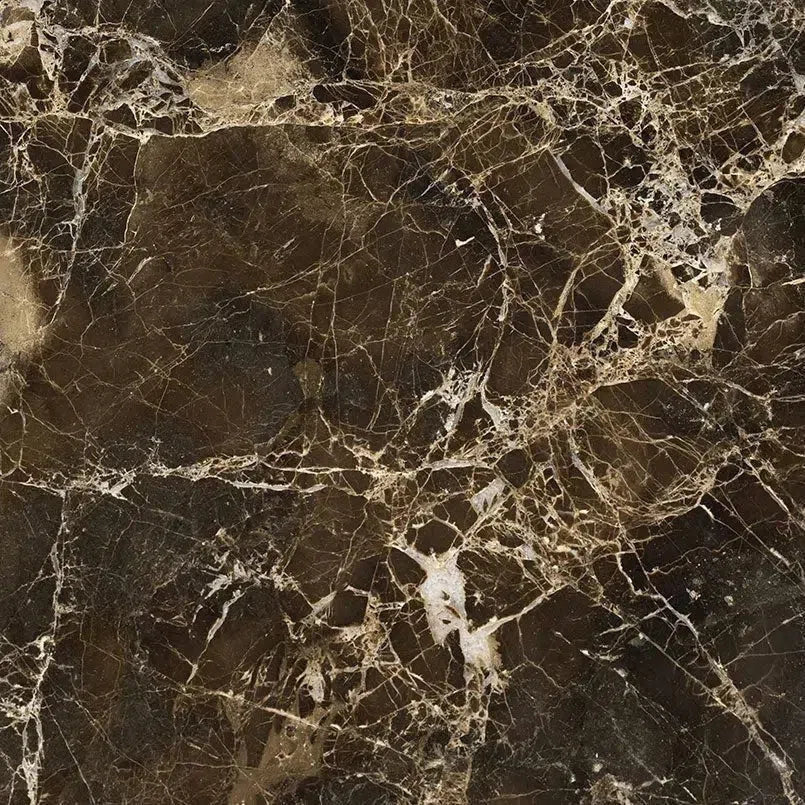
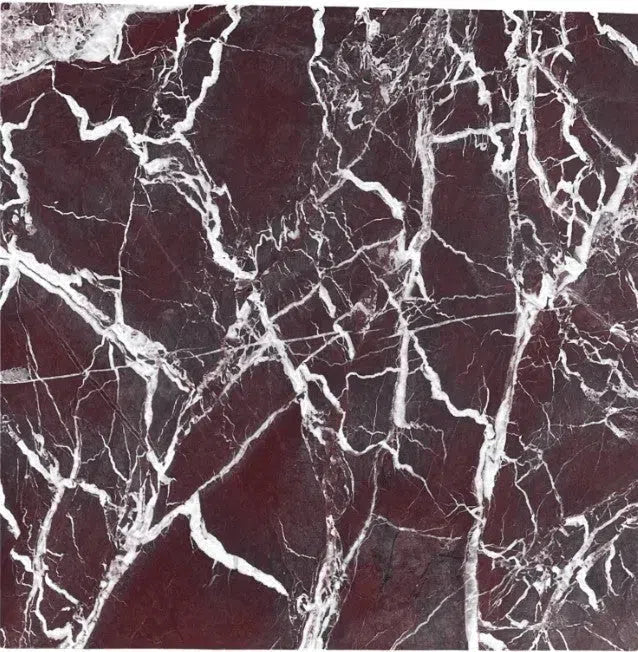
Charcoal, deep brown, and black stones create contrast and give the fireplace a grounded presence. Pietra Notte marble is described in the knowledge base as having a deep charcoal-gray background with white and soft silver veining, and fireplace surrounds are among its listed applications. Pietra Notte marble can therefore suit a room that needs a dark, refined focal surface without relying on a plain black field.
Veining, fossils, and natural movement
Pattern should be judged at the scale of the whole surround. Fine veins may disappear across a wide wall, while bold movement can dominate a narrow opening. Ask whether the fabricator can book-match or align pieces when that matters to the design, and accept that natural stone will never repeat with perfect regularity.
Polished, honed, tumbled, and textured finishes
Polished stone reflects light and feels formal, but it may reveal fingerprints, soot, or surface marks more readily. Honed stone has a softer, matte appearance and often feels more architectural. Tumbled and textured finishes add age and touchable depth, though their recesses may require more careful dusting. The finish should support the room’s mood as well as the maintenance routine.
A finish is easiest to judge when viewed beside the actual wall color and trim. A small sample can also reveal whether a surface catches glare from windows or becomes visually flat beside a painted mantel.
Coordinating the fireplace with floors and walls
The surround does not need to match the floor exactly. Instead, look for a shared undertone or a restrained connection in texture. A warm travertine may sit comfortably with oak, while cool gray marble can bridge white walls and brushed metal. If the room already contains patterned flooring, a quieter fireplace surface usually creates better balance.
Designing a natural stone fireplace surround
Once the stone is selected, proportion becomes the central design question. The same material can feel understated in small tiles, monumental in a slab, or handcrafted in irregular veneer pieces. Consider the opening, mantel height, ceiling line, furniture scale, and sightlines from the rest of the room.
Full-height slabs versus individual tiles
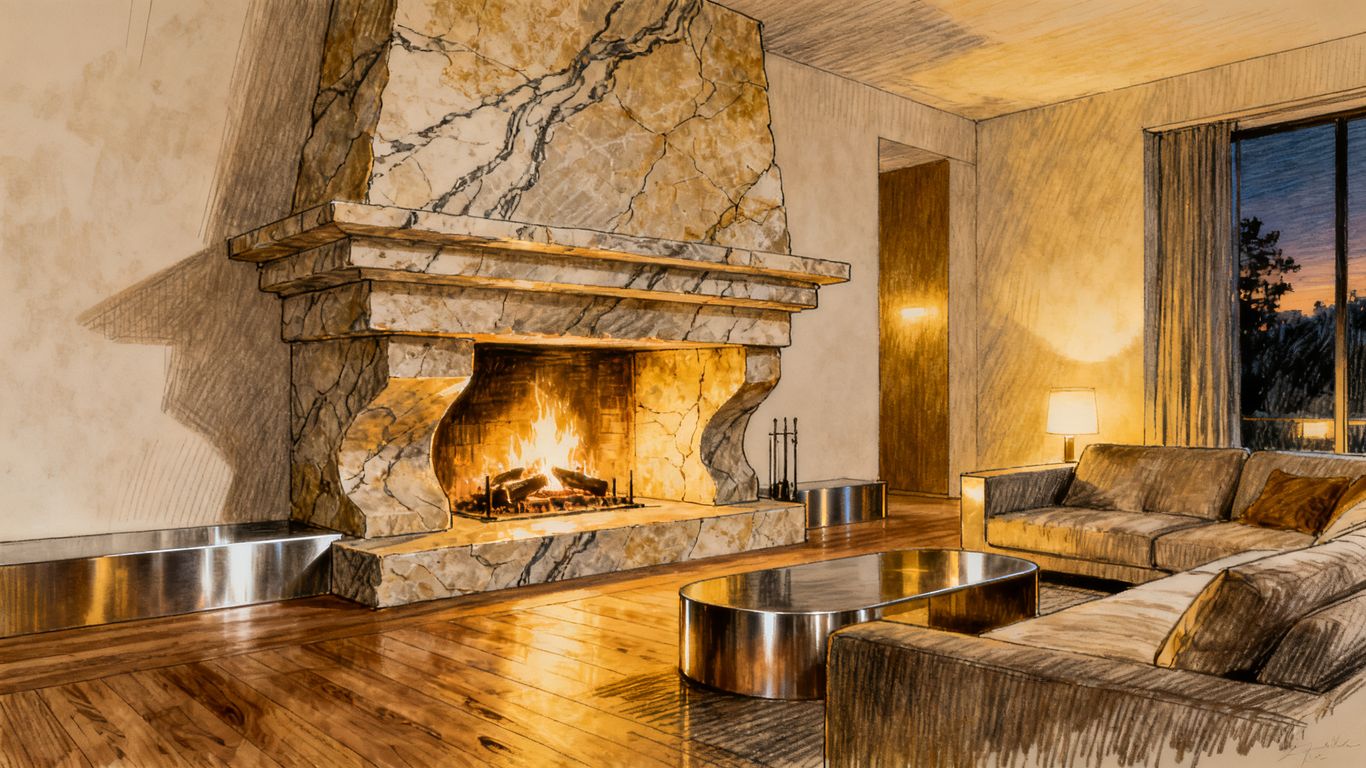
Full-height slabs create broad visual continuity and can make a fireplace wall feel architectural. They require careful templating, transport, handling, and fabrication, particularly around corners and openings. Individual tiles are more flexible and may simplify pattern changes, repairs, and installation around a complex surround.
Creating a classic mantel and surround
A classic composition often uses a framed opening, vertical legs, a horizontal mantel, and a distinct hearth. Stone trim can sharpen those transitions, while a thicker shelf adds shadow and weight. Keep the mantel proportionate to the firebox and room; an oversized shelf can make a small fireplace feel crowded.
Using mosaics, borders, and trim pieces
Mosaics can introduce detail without covering every surface in bold pattern. A narrow border around the opening or a simple liner beneath the mantel may be enough to define the composition. Surfaces Galore’s knowledge base describes custom mosaics made from several natural stones with customizable shapes, patterns, and finishes, which makes custom mosaics a useful direction when a standard layout does not fit the design.
Pairing stone with wood, metal, or painted finishes
Wood warms stone and works especially well with limestone or travertine. Blackened or brushed metal adds a cleaner edge to marble, while painted trim can keep a highly varied stone from feeling too busy. Use one material as the lead and let the others support it; too many competing textures can blur the fireplace’s silhouette.
Balancing bold stone with the rest of the room
A dramatic surround needs breathing room. Keep nearby art, rugs, and upholstery quieter when the stone has strong movement, or repeat one subtle stone color elsewhere to make the installation feel intentional. A room can be expressive without every surface asking for attention.
For projects comparing different surround approaches, this interior stone veneer guide offers another way to think about texture, scale, and fireplace placement. The same design questions apply whether the surround is made from tile, slab, or carefully selected veneer.
Planning for safe and professional installation
A fireplace surround is not an ordinary wall-tile project. Heat, weight, combustion clearances, and the exact firebox assembly all affect what can be installed and how it must be attached. Treat the planning stage as part of the design rather than an afterthought.
Checking firebox clearances and local building codes
Begin with the manufacturer’s installation instructions and applicable local building codes. Required clearances can vary by fireplace type, fuel, mantel construction, and combustible materials nearby. Do not assume that an existing surround was installed correctly or that a visually similar replacement can occupy the same space.
Choosing the right substrate and setting materials
The substrate must be sound, appropriately framed, and capable of carrying the stone’s weight. Setting materials should be selected for the substrate, stone, location, and expected heat exposure. A qualified installer can identify movement, moisture, or adhesion concerns before expensive slabs or tile are delivered.
Measuring the surround, hearth, and mantel accurately
Measure the firebox opening, wall width, height, hearth depth, mantel projections, corners, and outlets. Record several measurements rather than relying on one reading, since older walls are rarely perfectly square. A clear drawing with finished dimensions helps the fabricator plan seams, cuts, edge profiles, and waste.
Understanding tile, slab, and veneer installation
Tile installation involves layout, joints, cuts, and grout, while slab installation adds templating, fabrication, lifting, and seam placement. Veneer systems have their own substrate and attachment requirements. Even a lightweight-looking product should be evaluated as part of the complete assembly, not as a decorative layer alone.
When to hire a qualified fireplace contractor
Professional help is especially sensible when the project changes the mantel, hearth, firebox opening, venting, or surrounding framing. Hire a contractor who understands the specific fireplace type and can coordinate with the stone fabricator. For complex veneer work, fireplace veneer planning can provide useful design context, but local code compliance and the product instructions still control the installation.
Caring for and maintaining natural stone
Natural stone rewards simple, consistent care more than aggressive cleaning. The correct routine depends on the stone’s porosity, finish, grout, and the kind of fireplace being used. Keep product instructions and sealer information with the project records so future maintenance is based on the actual material.
Sealing porous stone before and after installation
Some stones benefit from sealing before grouting to reduce absorption and again after installation once the surface is clean and dry. Sealer does not make stone stain-proof, nor does it correct poor installation. Ask whether the chosen product is compatible with the finish and whether it changes the stone’s color or sheen.
Cleaning soot, dust, and everyday residue
Remove loose dust with a soft brush or vacuum attachment, then use a pH-neutral stone cleaner when needed. Avoid abrasive powders, harsh acids, and unapproved household chemicals, which can dull finishes or damage grout. Let the surface cool before cleaning and follow the fireplace manufacturer’s guidance for ash and soot removal.
Preventing stains, discoloration, and water damage
Keep damp firewood, wet tools, and metal accessories from resting directly on porous stone. Wipe spills promptly and use a hearth pad where sparks or embers may land. Darkening, efflorescence, or uneven marks can indicate moisture or a sealer issue, so investigate the source instead of repeatedly applying cleaner.
Repairing chips, cracks, and damaged grout
Small chips may be repairable with a color-matched stone filler, while cracks require closer assessment. A crack that follows the substrate or appears after movement may return if the underlying problem is ignored. Damaged grout should be removed and replaced with a compatible product rather than simply covered with a new layer.
Building a practical long-term maintenance routine
A manageable routine is more useful than an elaborate one. Keep these habits on the calendar:
- Dust the surround and mantel regularly with a soft, dry tool.
- Clean soot or residue only after the surface has cooled.
- Check grout, corners, and joints for movement or gaps.
- Refresh sealing according to the product manufacturer’s guidance.
These small checks help reveal problems while they are still easier to address. They also preserve the finish without turning fireplace care into a weekly renovation project.
Estimating the cost of a natural stone fireplace
The material price is only one part of a fireplace budget. Stone type, thickness, finish, layout, fabrication, access, substrate preparation, and installation can all change the final number. Request an itemized estimate so a low tile price does not hide significant fabrication or preparation costs.
Comparing material prices by stone type
Marble, travertine, limestone, granite, and harder specialty stones can vary widely in price. Within one category, rarity, quarry source, color consistency, and pattern also affect cost. A simple stone with modest variation may be less expensive than a premium slab with dramatic movement, even when both are the same general type.
Accounting for tile size, thickness, and finish
Large-format pieces may reduce visible joints but can require more careful handling and stronger support. Thick slabs and shaped trim add weight and fabrication time. Polished, honed, tumbled, and textured finishes may carry different processing costs, so compare complete installed options rather than material-only prices.
Including fabrication, delivery, and installation
Budget for templating, edge profiles, cutouts, seam preparation, crating, delivery, and labor. Difficult access, upper-floor delivery, or a tight installation window can add costs. For U.S. projects, nationwide shipping may be convenient, but the estimate should still clarify freight, unloading responsibility, and expected lead times.
Planning for waste and matching pieces
Allow extra material for cuts, breakage, future repairs, and pattern selection. More may be needed when veins must align or when a slab contains areas unsuitable for the visible surround. Ordering only the exact measured square footage can create a problem if a replacement piece is later needed from a discontinued batch.
Evaluating value beyond the initial purchase
A well-chosen stone can give a room lasting visual character, but value also includes serviceability, maintenance, installation quality, and how comfortably the design fits the home. Compare samples, specifications, and written estimates before choosing. That slower process is usually less expensive than replacing a surround that looked right online but felt wrong in person.
Conclusion
The best natural stone for a fireplace is the material that brings together safe performance, suitable maintenance, honest natural variation, and a design language that belongs in the room. Review full samples, plan the installation carefully, and choose a fabricator who respects both the stone and the firebox. With those decisions made early, the finished surround can feel established, useful, and distinctly yours.
Frequently Asked Questions
What is the best natural stone for a fireplace?
The best choice depends on the fireplace type, design goals, maintenance expectations, and installation conditions. Marble, travertine, limestone, granite, and other stones can work when selected and installed for the specific application.
Is marble safe to use around a fireplace?
Marble may be suitable for a fireplace surround when the stone, setting materials, clearances, and firebox assembly meet the relevant requirements. Confirm the details with the fireplace manufacturer and a qualified installer.
Should natural stone be sealed around a fireplace?
Porous stone may benefit from sealing, particularly where soot, spills, or moisture are possible. The appropriate sealer and schedule depend on the stone and finish, so follow the product manufacturer’s guidance.
Is a polished or honed finish better for a fireplace surround?
Polished finishes are reflective and formal, while honed finishes are softer and more subdued. Neither is universally better; the choice should reflect the room’s lighting, style, and cleaning expectations.
Can tile and slab be used in the same fireplace design?
Yes, tile and slab can be combined when their thicknesses, movement, edges, and setting requirements are planned together. A fabricator should coordinate transitions before materials are ordered.
How much extra stone should be ordered?
The amount depends on the layout, tile size, pattern, slab movement, and number of cuts. A fabricator or installer can calculate a practical allowance, with additional material often needed for matching and future repairs.
When should a fireplace contractor be hired?
Hire a qualified contractor when the project affects clearances, framing, the hearth, the mantel, venting, or the firebox itself. Professional guidance is also wise for heavy slabs, complex veneer, or unusual substrates.