











Key Takeaways
A natural stone tile floor brings genuine variation, tactile depth, and a lasting architectural feel to a project. The best result comes from matching the stone, finish, installation method, and maintenance plan to the room.
- Compare stone performance as carefully as color and pattern.
- Expect natural variation in veining, tone, texture, and thickness.
- Order enough material to allow for cuts, waste, and future repairs.
- Use compatible sealers and pH-neutral cleaners.
- Review samples in the actual room before committing.
Understand what makes natural stone tile flooring unique
Natural stone tile is quarried from the earth, cut into usable sizes, and finished for a particular visual and tactile effect. That origin gives every installation a sense of depth that is difficult to reproduce with a printed surface. For homeowners, renovators, designers, and architects, the appeal is both practical and emotional: the floor feels connected to the material itself.
How natural stone differs from ceramic and porcelain tile
Ceramic and porcelain tiles are manufactured from processed clay and designed for consistent color, size, and pattern. Natural stone, by contrast, is a geological material, so the surface may contain mineral movement, small fossils, open areas, or shifts in tone. This difference means stone rewards careful selection and layout rather than promising absolute uniformity.
A natural stone tile floor also tends to develop a softer, more settled appearance over time. Its maintenance needs vary by stone and finish, while manufactured tiles generally offer more predictable absorption and surface behavior. Neither choice is automatically better; the right material depends on the room, the desired character, and the care the owner is prepared to provide.
The character of variation, veining, and surface texture
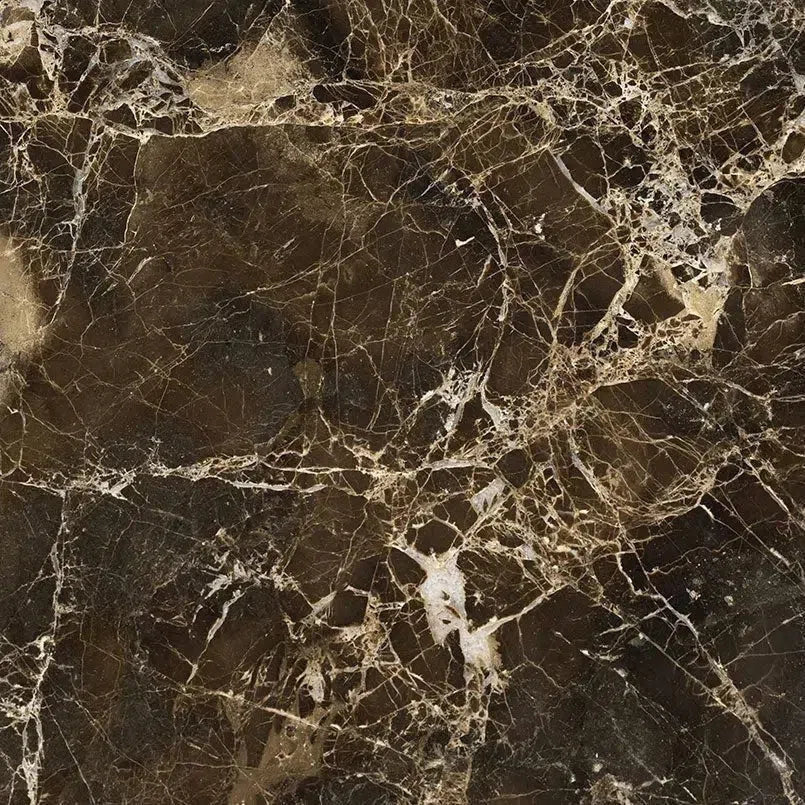
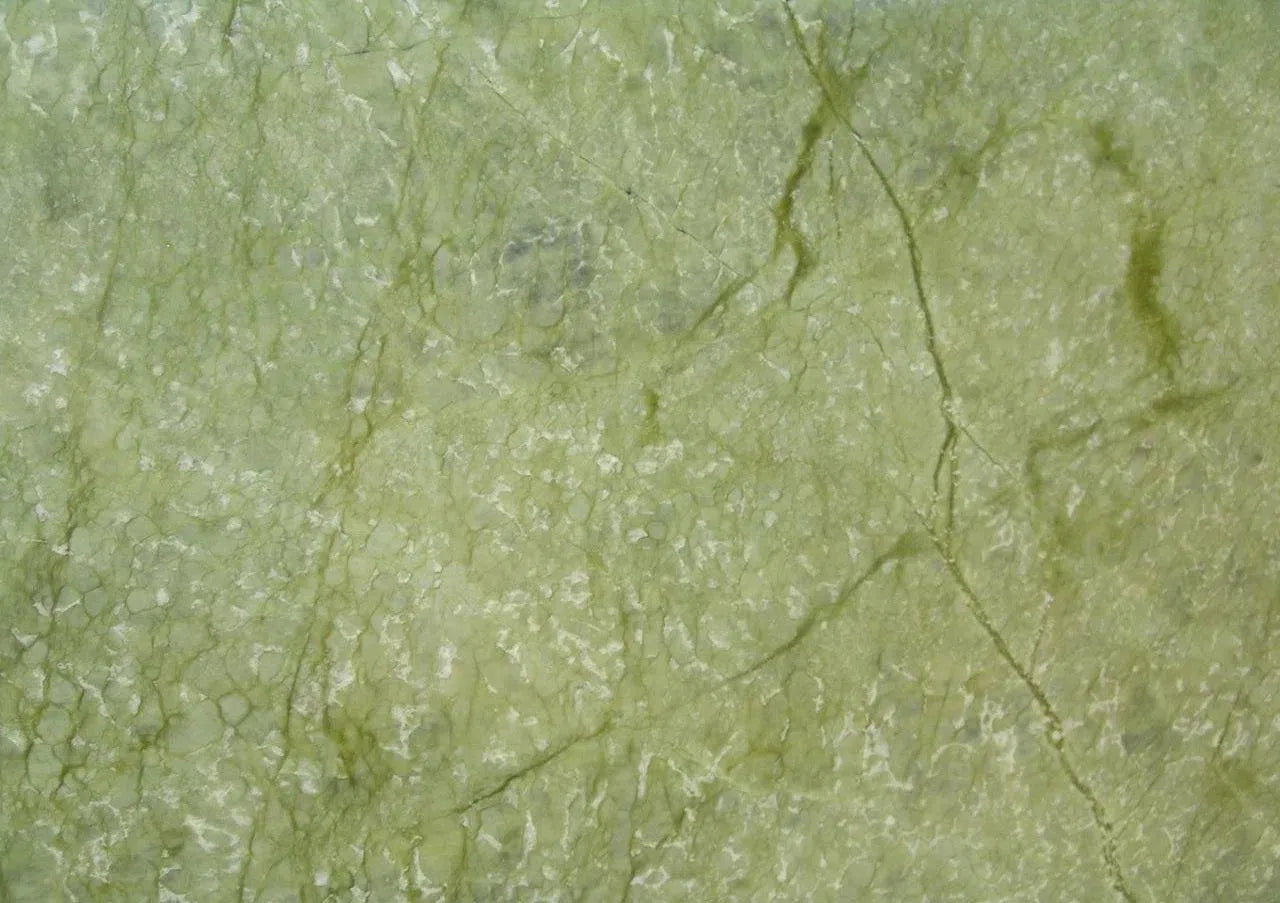
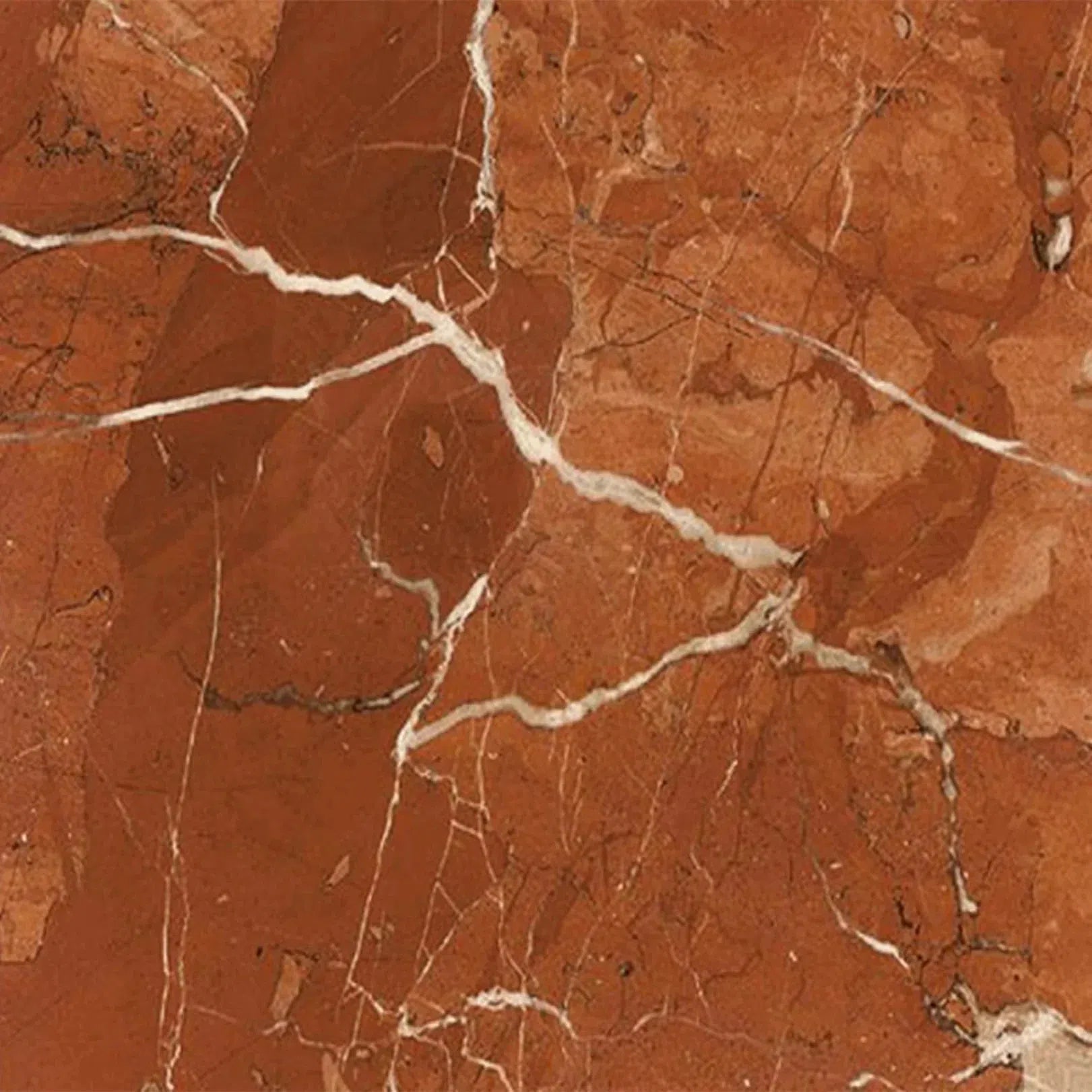
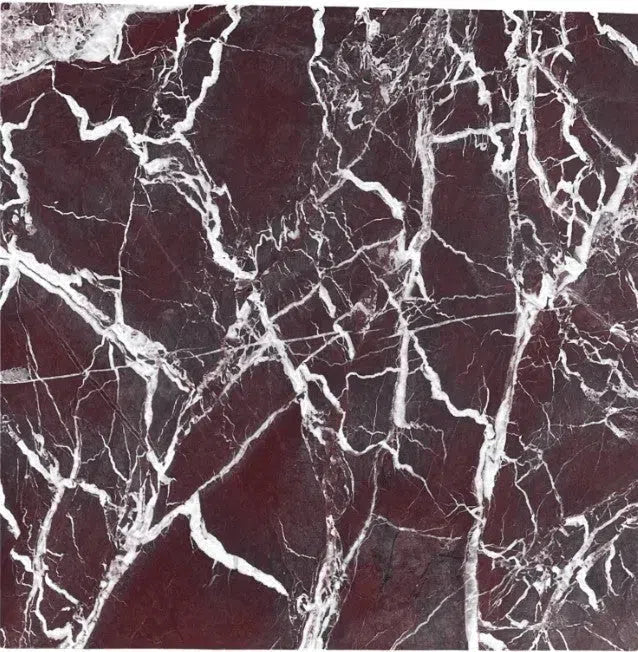
Variation is part of the material’s identity. White marble may move from quiet gray lines to dramatic veining, while limestone can show fossils, cloudy beige tones, or subtle surface shifts. Tumbled and aged finishes add softened edges and touchable texture, giving a new floor the feeling of an older architectural surface.
Before installation, decide whether you want the tiles blended evenly or arranged to create movement. Setting aside a few unusually marked pieces for focal areas can make the finished floor feel intentional. The goal is not to erase nature’s differences, but to give them a thoughtful place in the composition.
Key benefits for residential and commercial spaces
Stone works across entries, living rooms, kitchens, baths, lobbies, corridors, and outdoor settings when the material and installation are appropriate. It can make a small room feel more substantial, give a large room a calmer rhythm, and connect interior finishes with exterior paving. The broad range of sizes and patterns also suits both quiet renovations and highly decorative projects.
For busy homes and commercial interiors, lasting visual character is one of the strongest reasons to choose stone. A well-selected floor can remain relevant through changing furniture, paint, and décor, which is one reason natural stone is often considered for long-term renovations.
Important limitations to consider before buying
Natural stone is not maintenance-free. Porous varieties may need sealing, polished surfaces can show etching or scratches, and uneven or textured finishes require more attention during cleaning. Stone is also heavy and unforgiving of a poorly prepared substrate, so installation planning matters from the beginning.
Moisture, traffic, sunlight, freeze-thaw exposure, and footwear should all influence the choice. For a useful overview of material durability and care considerations, review this stone tile guide before finalizing a specification.
Choose the right stone for your space
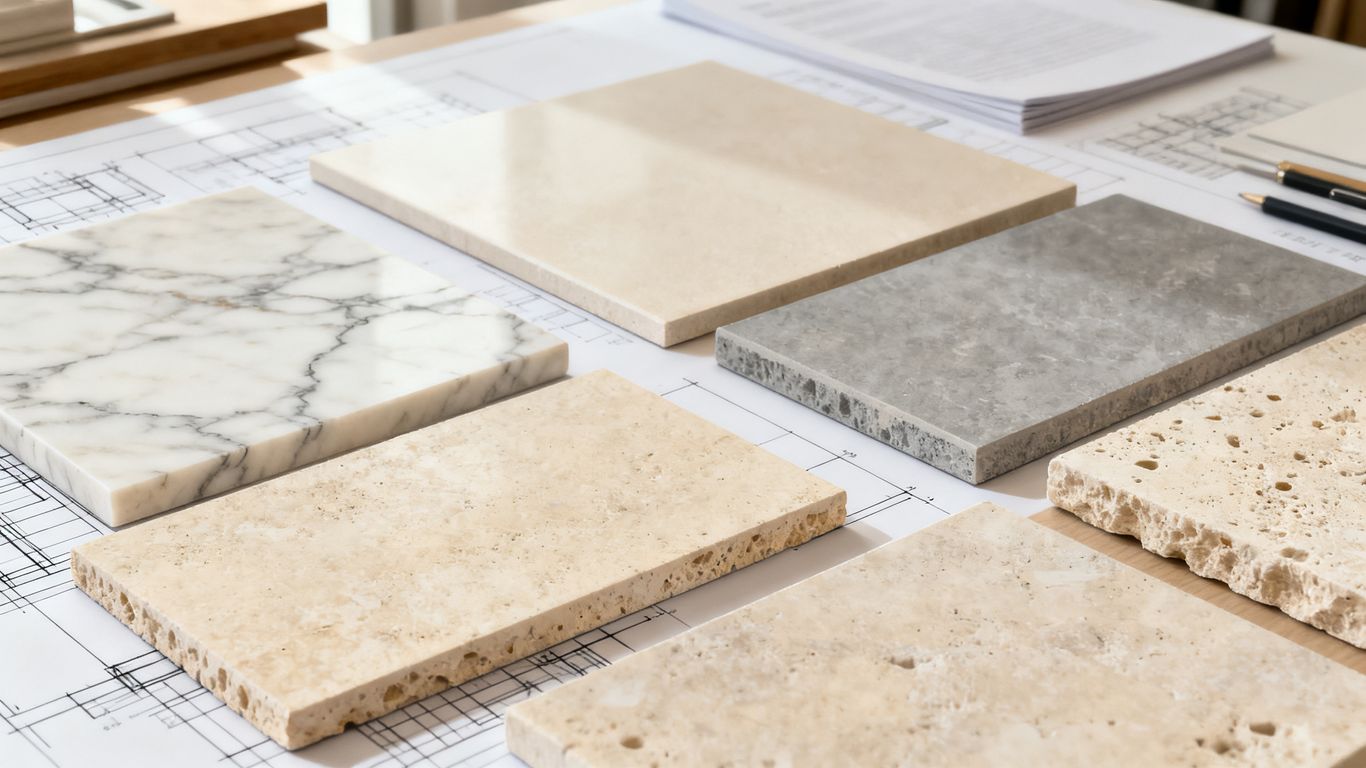
Marble, limestone, and travertine each bring a different mood to a natural stone tile floor. Marble often feels refined and luminous, limestone feels relaxed and grounded, and travertine combines historic texture with broad design flexibility. Start with the room’s conditions, then narrow the choice by color and finish.
Marble for luxury interiors and statement floors
Marble is a natural choice when the floor needs to feel polished, expressive, or quietly grand. White varieties with gray veining can brighten an entry or living room, while darker marble creates contrast and a more intimate atmosphere. The stone’s movement should be viewed across several tiles, not judged from one isolated square.
Surfaces Galore offers Carrara White products described as having a white background with subtle gray veining, making that material a flexible starting point for classic and contemporary interiors. Marble can also be used in bathrooms, shower floors, walls, backsplashes, and decorative layouts, provided the finish and installation suit the conditions.
Limestone for warm, organic character
Limestone has a softer visual language than highly veined marble. Beige, cream, and muted gray tones sit comfortably beside wood, plaster, painted cabinetry, and aged metals. Some collections include fossils and natural markings, which can make a large floor feel varied without becoming visually busy.
An aged or rustique limestone finish adds softened edges and gentle texture, particularly in kitchens, entryways, living spaces, and transitional interiors. Because limestone varies in density and porosity, ask for care guidance and confirm that the selected product is appropriate for the intended location.
Travertine for timeless texture and versatility
Travertine is recognized for its earthy palette, layered texture, and small natural voids or filled areas. It can read rustic, Mediterranean, traditional, or surprisingly modern depending on the tile size, grout, and finish. French and Versailles-style layouts are especially effective when the goal is an established, architectural feel.
A checkerboard arrangement can bring stronger contrast, while a restrained ivory or beige installation creates a quieter field. Surfaces Galore’s checkerboard tile layouts are presented for marble and travertine applications ranging from interior floors to patios, bathrooms, and pool areas.
Matching stone performance to room conditions
The same stone can behave differently depending on where it is installed. A dry living room has different demands from a shower floor, an outdoor patio, or a busy commercial entry. Consider these questions before choosing a sample:
- Will the surface regularly contact water, oils, mud, or food?
- Does the finish provide an appropriate level of traction?
- Is the room exposed to strong sunlight or outdoor temperature changes?
- How much routine cleaning and resealing is realistic?
The answers should guide the material more than a trend photograph does. A knowledgeable supplier can help identify the right product, but the final selection should reflect the actual project conditions.
Select the right color, pattern, and finish
Once the stone is selected, design decisions become more connected. Color affects perceived room size and light, pattern controls movement, and finish changes both the way the stone feels and how it performs. Bring cabinetry, paint, hardware, and adjacent flooring into the conversation early.
Coordinating white, gray, beige, brown, and dark stone tones
White and pale gray stone can reflect light and create a clean, open feeling, while beige and brown tones add warmth. Dark gray, black, and deep brown stone create drama but may need enough surrounding light to avoid making a room feel closed in. Mixed palettes work best when one tone clearly leads and the others act as accents.
For example, warm limestone can sit comfortably with natural oak, while black marble may benefit from white walls or pale wood. Sample the stone beside fixed finishes at morning and evening, since veining and undertones can change noticeably with light.
Using checkerboard, herringbone, and French patterns
Patterns give ordinary geometry a stronger sense of place. Checkerboard is crisp and historic, herringbone adds directional movement, and a French or Versailles pattern creates a relaxed field of varied rectangles. The pattern should support the room’s scale rather than compete with every other surface.
Surfaces Galore describes its marble pattern collection as suitable for grand foyers, bathrooms, hotel lobbies, dining areas, and other statement interiors. For a smaller room, use fewer colors and a simpler grout contrast so the layout remains legible without feeling crowded.
Comparing polished, honed, tumbled, and aged finishes
Polished stone has a reflective surface that amplifies color and veining, but it can show marks and may be slippery when wet. Honed stone has a softer, matte appearance and often feels more relaxed. Tumbled and aged finishes introduce irregular edges, small surface variations, and an old-world quality.
The finish should be considered alongside the room’s use. A smooth finish may suit a formal living room, while a more textured option can provide visual and tactile interest in an entry or casual kitchen. Always confirm cleaning and sealing recommendations for the exact product.
Creating visual balance with grout color and tile size
Grout can either frame every tile or recede into the background. A close color match produces a calmer surface, while contrast makes the pattern more graphic. Larger tiles reduce the number of grout lines, but they require a flatter substrate and careful handling.
Use layout drawings or dry-lay a small section before ordering. This is also the right moment to think about borders, medallions, thresholds, and how the floor will meet another material. If you need a simple design consultation, bring room dimensions and finish samples so the discussion stays practical.
Plan a natural stone tile floor installation
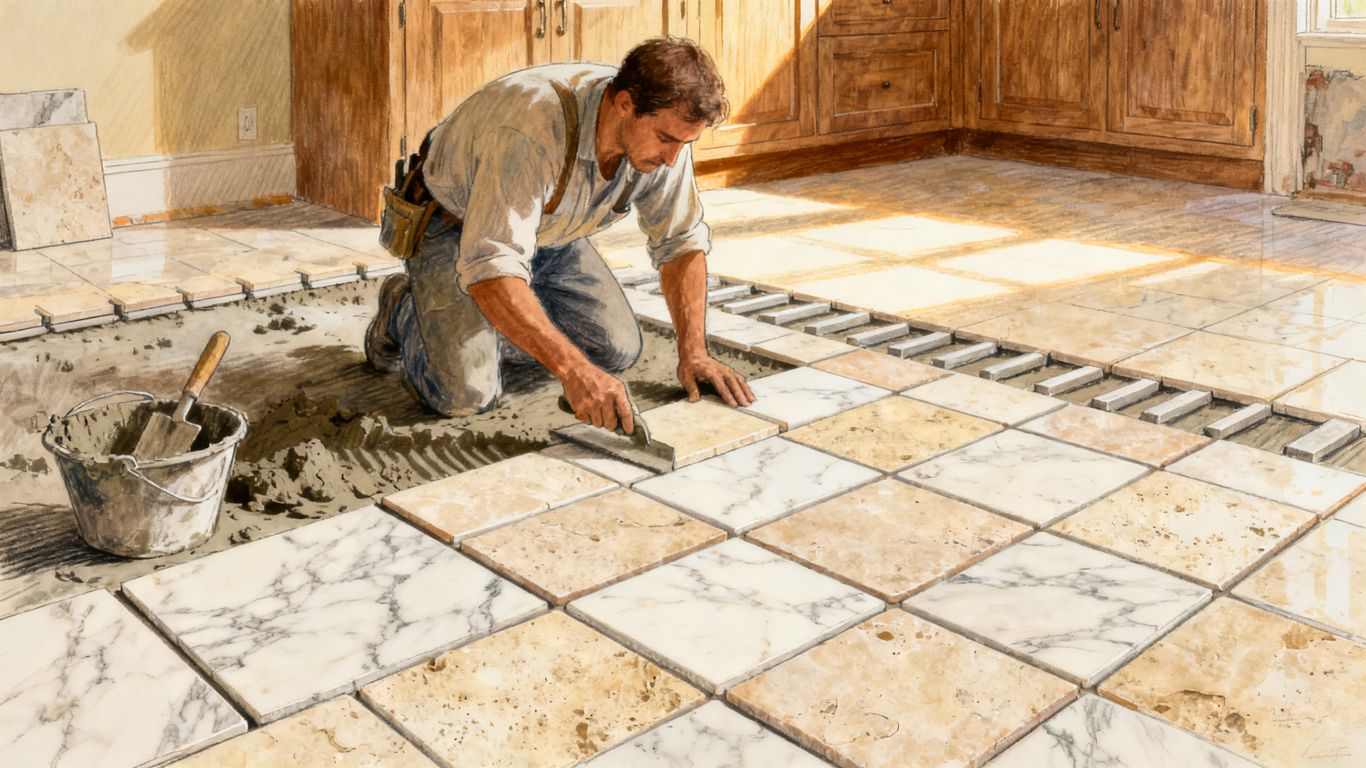
Installation quality has a direct effect on the appearance and service life of the finished floor. Stone tiles may vary slightly in thickness, and large or patterned layouts leave little room for careless preparation. Measure carefully, inspect the substrate, and resolve transitions before the first tile is set.
Measuring the space and ordering the right quantity
Measure the length and width of each area, then account for alcoves, closets, doorways, and unusual angles. Add an allowance for cuts, breakage, natural selection, and a small number of tiles retained for future repairs. Patterned layouts can require additional material because the cut pieces cannot always be reused elsewhere.
Confirm whether listed dimensions are nominal and ask how many tiles are packed per carton. It is better to calculate the full project at once than to discover later that a replacement batch has a different tone or calibration.
Checking subfloor preparation and structural requirements
The substrate must be clean, stable, adequately flat, and appropriate for the selected setting system. Cracks, movement, moisture, and weak areas should be addressed before tile is installed. A professional should also verify that the structure can support the added weight, especially in renovations or upper-level rooms.
Stone does not hide movement well. Rushing preparation can lead to cracked tiles, uneven edges, loose areas, or grout failure. Follow the setting-material manufacturer’s instructions and use movement joints where the installation requires them.
Planning tile layout, transitions, and edge details
Begin with the sightlines people will notice first: the center of an entry, the main kitchen axis, or the view from a doorway. A balanced layout usually looks better than one that simply starts against the nearest wall. Plan thresholds, baseboards, stair edges, drains, and changes in elevation before cutting.
A paper drawing or digital layout can expose awkward slivers and help coordinate adjoining rooms. If the floor connects to wood, carpet, or another tile, decide whether the transition should be subtle, framed, or deliberately decorative.
Deciding when to hire a professional installer
A small, square room may be manageable for an experienced DIY renovator, but natural stone becomes more demanding when the format is large, the pattern is complex, or the substrate needs correction. Wet rooms, stairs, outdoor installations, and expansive commercial floors also benefit from specialized experience.
Ask prospective installers about prior stone work, layout planning, sealing, and how they handle variation. A clear written scope should identify preparation, setting, grouting, sealing, protection, and cleanup rather than treating installation as a single vague line item.
Protect the floor with proper sealing and care
Care begins with understanding the stone rather than applying the same routine to every surface. Porosity, finish, grout, and location all affect the maintenance plan. A simple schedule, followed consistently, is usually more useful than occasional aggressive cleaning.
Why sealing matters for porous natural stone
Sealing helps reduce the speed at which moisture and staining substances enter porous stone, although it does not make the material completely impervious. The correct sealer depends on the stone, finish, location, and desired appearance. Test a small inconspicuous area before treating the full floor.
Follow the product instructions for preparation, dwell time, wiping, and cure time. Outdoor stone and heavily used interiors may require a different schedule from a lightly used bedroom or decorative area.
Choosing cleaners that will not damage the surface
Dust and grit should be removed regularly with a soft broom, vacuum suitable for hard floors, or clean dust mop. Use a stone-safe, pH-neutral cleaner diluted as directed. Avoid acidic household products and abrasive powders, which can dull or etch sensitive surfaces.
Too much cleaner can leave a film, especially on honed or textured tile. Clean water, clean tools, and prompt drying are often as important as the cleaning product itself.
Handling spills, stains, scratches, and etching
Blot spills instead of rubbing them across the floor. Water, oil, wine, food, and muddy residue should be addressed promptly, while unknown stains are best evaluated before a treatment is applied. Scratches and etching may require professional honing or refinishing rather than a household repair product.
Do not assume that a darker mark is a permanent stain; it may be moisture temporarily held in the stone. If the problem persists, document the material, finish, and cleaning products used before seeking technical advice.
Establishing a practical routine maintenance schedule
A useful routine is simple enough to follow during ordinary life. Sweep high-traffic areas frequently, wipe spills as they occur, damp-clean when needed, and inspect grout and sealed areas periodically. Place mats near exterior doors, but choose backing that will not trap moisture or discolor the stone.
Keep a few spare tiles and record the product name, finish, sealer, and installation date. That small amount of documentation can make later repairs far easier.
Design natural stone tile floors for different rooms
The strongest designs respond to how each room is used. A formal entry may welcome polished movement, while a kitchen or patio may call for a quieter finish and more forgiving texture. Extending one stone through connected spaces can create continuity, but it is not necessary to use one finish everywhere.
Creating an elegant marble entryway or living room
An entryway gives marble room to make an impression, especially when the layout is aligned with the door and surrounding architecture. In a living room, large-format tiles can create a calmer field, while a border or contrasting inset can define the seating area without adding furniture.
Keep the rest of the palette disciplined. Strong marble movement needs breathing room, so pair it with simple textiles, restrained millwork, or one carefully chosen accent color.
Designing a durable limestone or travertine kitchen floor
Limestone and travertine can make a kitchen feel warm, established, and connected to natural materials. Beige, ivory, and soft brown tones work especially well with painted cabinetry and wood. A honed, tumbled, or aged finish may also make everyday texture feel intentional rather than overly formal.
Because kitchens see spills and dropped objects, plan sealing and cleaning before installation. Use rugs or mats where practical, but do not allow moisture to remain trapped beneath them.
Using natural stone in bathrooms and powder rooms
Bathrooms benefit from stone’s ability to bring color and texture into a relatively compact space. Marble can create a bright, refined floor, while limestone or travertine offers a softer, spa-like atmosphere. In wet areas, select the finish, grout, slope, and waterproofing system as one coordinated specification.
A powder room gives more freedom to use dramatic veining or dark stone because it generally has less standing water and traffic. Sample the floor with the vanity, wall tile, and metal finish rather than choosing it in isolation.
Extending stone flooring into patios and outdoor areas
Outdoor stone must be selected for the climate, exposure, drainage, and installation method. Marble and travertine may create a beautiful patio or pool setting, but the specific product and finish must be suitable for exterior use. Freeze-thaw conditions, water movement, and surface traction deserve particular attention.
A consistent color family can visually connect an interior floor to a terrace without requiring identical tile. Outdoor layouts should also include appropriate slopes, joints, edge details, and protection from standing water.
Evaluate quality, sourcing, and long-term value
The best-looking photograph cannot replace inspecting the actual tile. Quality involves more than a high price: it includes consistency within the intended grade, honest description of variation, suitable thickness, accurate dimensions, and a finish appropriate to the project. Source, documentation, and support matter as well.
Inspecting tile thickness, finish, and natural variation
Review several tiles together on a flat surface. Check for chipped corners, excessive warping, inconsistent thickness, surface defects, and differences that may make installation difficult. Some variation is expected and desirable, but it should be understood before purchase.
Ask whether the tiles are calibrated, filled, brushed, tumbled, honed, or polished. These terms describe real installation and maintenance differences, not just marketing language.
Comparing authentic imported stone with lower-cost alternatives
Imported stone can offer distinctive colors, veining, and textures shaped by the quarry source. A lower price may still be appropriate for a project, but compare more than the cost per square foot. Include shipping, waste, setting materials, sealing, installation complexity, and the expected maintenance burden.
A direct importer may provide access to international quarry materials while keeping the buying process closer to the source. For broader context on stone’s longevity and the care polished surfaces may need, read this natural stone flooring overview.
Ordering samples and reviewing tiles before installation
Samples are useful, but a small sample cannot show every possible shift in a natural material. Order enough to view several pieces together, then place them near flooring, cabinetry, walls, and natural light. If the project is large, request additional images or a current lot review when available.
Keep the approved sample with the project records. On delivery, inspect cartons before installation and separate tiles with unusual markings rather than discovering the issue after adhesive has cured.
Working with a knowledgeable natural stone supplier
A capable supplier should answer practical questions about origin, sizes, finishes, care, lead times, packaging, and availability. They should also be comfortable saying when a particular stone or finish is not a good fit. That straightforward advice can prevent expensive changes later.
For homeowners and professionals planning U.S. projects, nationwide shipping and clear communication are useful parts of the purchasing experience. Surfaces Galore presents itself as a direct importer of marble and travertine, with collections intended for residential and commercial applications. When comparing suppliers, consider this stone flooring resource alongside samples, specifications, and installation guidance.
The same care applies to any renovation purchase, whether you are arranging efficient resource planning, creating a quiet study space, selecting a water filtration system, or ordering frozen Indian meals: confirm the product, conditions, timing, and support before committing. Those links are different subjects, but the planning principle is familiar—specific requirements lead to better decisions.
Make the right stone choice
A natural stone tile floor is a design decision and a building decision at the same time. Choose the stone for its visual character, but also confirm that its finish, porosity, thickness, and installation method suit the room. With honest sampling, sound preparation, and regular care, the floor can become one of the most enduring parts of the project.
Conclusion
The most timeless stone floors are not necessarily the most elaborate; they are the ones whose material, pattern, finish, and maintenance plan fit the people and spaces around them. Take time to compare real samples, ask direct questions, and let natural variation become part of the design.
Frequently Asked Questions
Is a natural stone tile floor suitable for every room?
Natural stone can work in many rooms, but the stone, finish, sealing, waterproofing, and installation method must match the conditions. Wet rooms and outdoor areas need especially careful product selection.
Which natural stone is best for a busy entryway?
Marble, limestone, and travertine can all be considered, depending on density, finish, traffic, and maintenance expectations. A supplier and installer should evaluate the specific product rather than relying on the stone name alone.
Does natural stone tile need to be sealed?
Many porous stones benefit from sealing because it slows absorption and makes routine cleanup easier. Sealing does not prevent every stain or replace prompt care, and the correct schedule varies by product and location.
Is polished stone slippery?
A polished surface can be more slippery when wet than a honed or textured finish. For bathrooms, pool areas, entries, and other moisture-prone locations, discuss traction and the intended use before choosing the finish.
How much extra tile should be ordered?
The allowance depends on room shape, tile size, pattern, cuts, breakage, and future repair needs. Measure the complete installation and ask the supplier or installer to calculate a suitable overage.
Can different natural stone tiles be used together?
Yes, different stones can work together when their colors, thicknesses, finishes, and performance requirements are coordinated. Use samples and a layout plan to check that the combination feels balanced.
How should natural stone floors be cleaned?
Remove grit regularly, wipe spills promptly, and use a pH-neutral cleaner made for stone. Avoid acidic or abrasive products, and follow the care instructions for the exact stone and finish.