




Key Takeaways
Incorporating shell-inspired elements introduces an organic, light-reflective quality that elevates residential spaces. These materials bridge the gap between historical coastal architecture and contemporary refined interiors through texture and light.
- Mother of pearl mosaics provide a luminous focal point for bathrooms and backsplashes.
- Porcelain and ceramic shell-inspired tiles offer high durability for wet environments.
- Proper surface preparation is essential to prevent adhesion issues on delicate shell-based materials.
- Maintaining shell surfaces requires mild, non-abrasive cleaners to preserve their natural iridescent sheen.
- Pairing shell tiles with natural stone and wood accents creates a balanced, multi-dimensional design palette.
Understanding the appeal of seashell tile
The aesthetic of organic coastal design
At its core, the use of shell-inspired materials reflects a deeply human desire to bring the tranquility of the shoreline into the private sanctuary of the home. This design choice captures light in ways that man-made materials rarely achieve, creating a vibrant, shifting visual depth that evolves as the sun moves across a room.
Material composition and natural variations
Unlike manufactured stones, natural shell tiles are sourced directly from biological origins, resulting in inherent color and textural differences. Every piece carries the unique history of the mollusk from which it was harvested, ensuring that no installation looks exactly like another. At Surfaces Galore, we appreciate the beauty found in these natural variations, which mirror the authenticity we emphasize in our premium marble and travertine collections.
Why seashell adds warmth to modern spaces
Modern design often relies on clean lines and monochromatic palettes, which can occasionally feel clinical or sterile. Integrating shell elements provides an immediate injection of organic warmth without sacrificing a modern edge. By introducing these tactile, natural materials, a designer can soften the harder surfaces typically found in upscale residences, such as sleek countertops or large-format tile flooring.
Common types of seashell tile and finishes
Mother of pearl mosaic variations
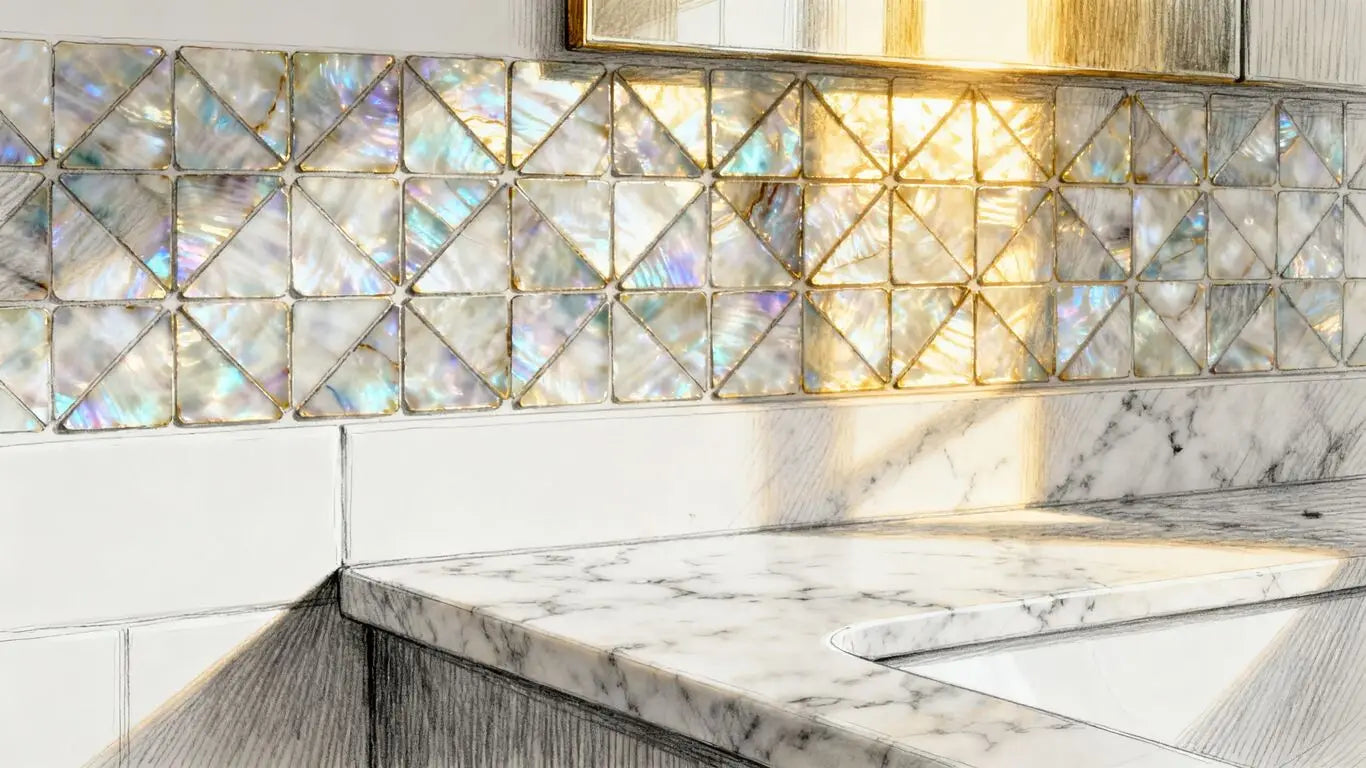
Mother of pearl tiles feature the inner lining of shells, which offers a high degree of luster and iridescence. Enthusiasts often find Seashell Dreams Square Mosaic Tile to be a standout option for those seeking that signature pearlescent glow. These mosaics are frequently used to define smaller architectural moments, like tiled niches or small-scale backsplashes.
Glazed ceramic and porcelain shell-inspired tiles
For areas demanding extreme durability, designers may pivot toward ceramic or porcelain that mimics the form and texture of seashells. These materials are fire-tested and resistant to staining, making them a practical, low-maintenance alternative for high-traffic zones. Many options, such as the Italian Glazed Seashell, utilize traditional shaping techniques combined with modern glazing technology to provide a high-end look without the fragility of natural shell layers.
Differences between natural shell and synthetic alternatives
While natural shells offer unparalleled authenticity and reflection, synthetic alternatives are designed for resilience and consistency. When choosing between the two, consider the application environment. For a highly trafficked commercial entryway, a synthetic shell-look paver might perform better, but for a private vanity backsplash, nothing replaces the tactile, organic richness of real mother of pearl.
Best applications for seashell tile in the home
Creating a serene bathroom sanctuary
Bathrooms serve as the perfect canvas for shell-based designs because the material pairs beautifully with chrome or brushed nickel fixtures. The shimmering surface catches the light from sconces, creating a calm, spa-like environment. When planning a remodel with Surface Galore natural stone to anchor the floors, a shell mosaic can be the ideal vertical accent to tie the room together.
Kitchen backsplashes with light-catching texture
In kitchens, a shell mosaic backsplash can transform a standard work zone into the centerpiece of the home. Because these tiles are reflective, they help brighten kitchens that might otherwise lack natural light.
Accent walls and decorative focal points
Shell tiles are exceptionally effective when used sparingly to highlight a decorative focal point, such as behind a fireplace mantle or in a foyer niche. Because the tiles draw the eye, they should be used in spots where you want to emphasize architectural intent or personal style.
Considerations for high-moisture environments
When applying shell to high-moisture areas like showers or pool decks, one must ensure the substrate is fully waterproofed to protect the longevity of the installation. The following table provides a basic comparison of material performance in these settings:
| Material Type | Moisture Resistance | Maintenance Level | Best Application |
|---|---|---|---|
| Natural Shell | Moderate | High | Dry Walls/Backsplash |
| Glazed Ceramic | High | Low | Wet Showers |
| Porcelain Paver | Very High | Low | Pool/Patio |
Selecting the right material ensures that your design remains functional for years to come. Regardless of the surface choice, ensure your contractor is experienced in handling delicate stone and shell, as professional care determines the final result.
Installation tips for delicate shell surfaces
Preparing substrates for uniform adhesion
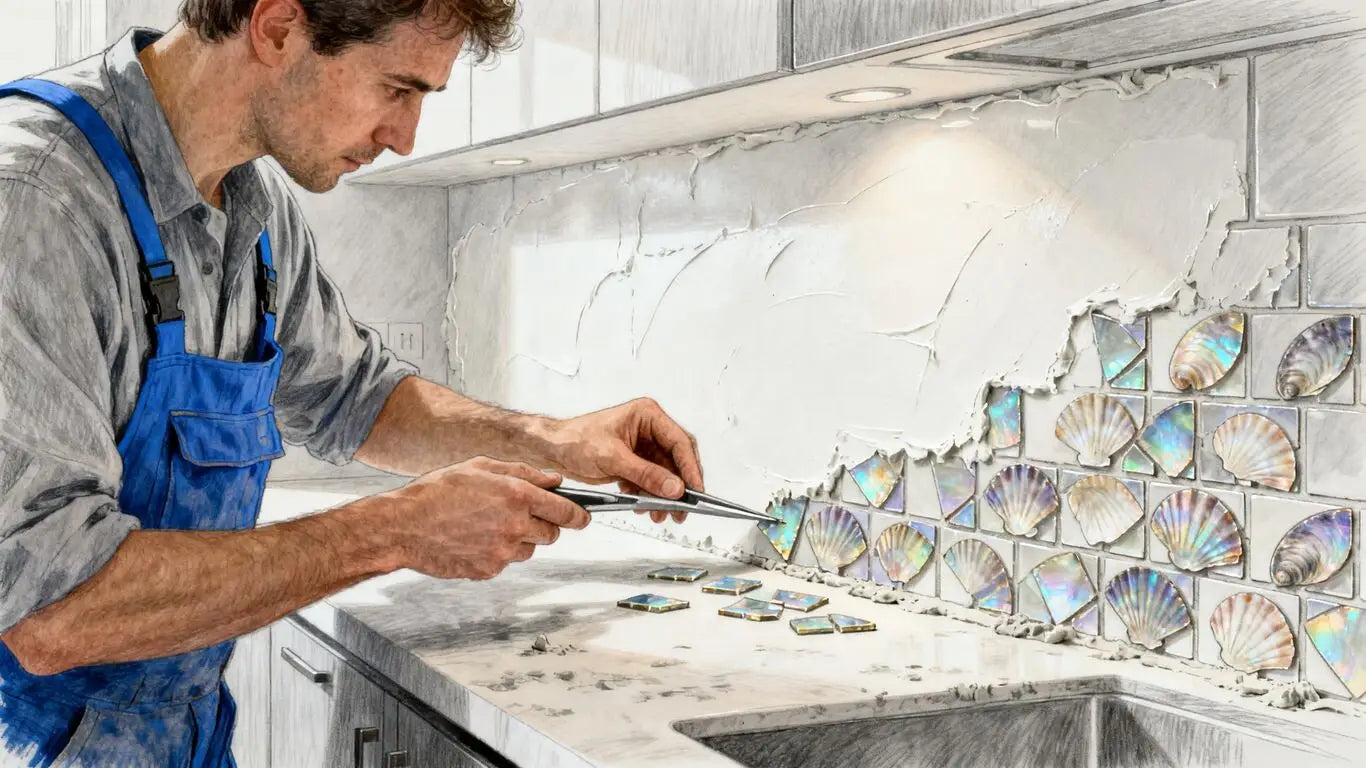
Delicate shell surfaces require a perfectly level and dry substrate to prevent potential cracking. Any movement in the wall or floor can cause the brittle shell mosaic sheets to buckle, which is why proper surface bonding is the single most important step in the installation process.
Choosing the right mortar for light-colored tiles
Because most shell tiles are semi-translucent, using a dark or gray mortar can bleed through and ruin the aesthetic. Always select a high-quality white thin-set mortar designed for natural materials. This not only ensures the color stays true but also maintains the brightness of the iridescent finish that makes the installation valuable.
Best practices for grouting and protecting natural surfaces
Once the tiles are set, use non-sanded grout to avoid scratching the surface of the shells. Because shell and natural stone can be porous, we recommend several best practices to protect your new stone project:
- Conduct a dry layout check before applying any adhesive to ensure design flow.
- Use a professional-grade sealer during the initial installation phase.
- Always test your grout in an inconspicuous area for potential staining.
- Plan to provide routine, gentle cleaning access for the finished surface.
- Avoid using metal tools or hard sponges during the grout cleanup phase.
Following these steps helps maintain the integrity of the shell pieces while ensuring the entire layout remains cohesive.
Maintenance and care for long-lasting luster
Daily cleaning routines for shell mosaics
Keeping shell tiles clean is relatively straightforward when done consistently. A soft microfiber cloth and a mild soap-and-water solution are typically all that is required for daily upkeep. Like caring for fine skincare oils and creams that require gentle handling, your shell surfaces appreciate a soft touch rather than heavy-handed scrubbing.
Avoiding harsh chemicals and abrasive cleaners
Avoid acidic cleaners like vinegar, lemon, or bleach at all costs, as these will permanently etch or dissolve the calcareous structure of the shells. Many household cleaners marketed as universal solutions are far too strong for natural mosaic materials and can strip away the shimmering protective topcoat over time.
Periodic sealing and preservation techniques
While shell is highly resistant to standard humidity, it benefits from an application of a high-quality stone sealer every one to two years. This creates a protective barrier against water and dirt buildup in the grout lines and the microscopic pores of the shell, effectively locking in the luster that defines the space.
Designing with style: pairing seashell tiles with other materials
Balancing textures with natural stone
Pairing high-gloss shell tiles with the matte, earthy finish of natural stone creates a dynamic visual tension. The contrast between the cool, reflective shell and the dense, solid feel of marble or limestone brings a high-end, curated look to any room.
Combining shell with wood and brass accents
Integrating wood and brass with shell tiles captures the essence of classic coastal design. The warmth of wood grains and the metallic sheen of brass provide a sophisticated frame for the ethereal quality of the shell, grounding the design in a way that feels luxurious and intentional.
Selecting grout colors to enhance or contrast patterns
Choosing a grout that matches the primary shell color helps create a seamless, monolithic effect that allows the light-play of the tiles to take center stage. Conversely, a subtle contrast in grout color can help highlight the individual shape of the tiles, particularly in mosaic formats that use geometric patterns.
Conclusion
Seashell tile offers a unique opportunity to infuse organic, light-filled elegance into modern residential designs, transforming ordinary walls and backsplashes into truly luminous architectural features. By balancing these delicate materials with the structural integrity of natural stone and following strict care guidelines, homeowners can enjoy a sophisticated, timeless aesthetic that reflects both the beauty of the coast and the artistry of modern design, ensuring that every project remains a masterpiece of style for years to come.
Frequently Asked Questions
Is seashell tile appropriate for high-traffic flooring?
Natural shell tiles are generally too delicate for heavy foot traffic, as they can be prone to scratching or cracking under stress. If you desire a shell-inspired look in a high-traffic area, consider specialized porcelain pavers designed for durability instead.
Can I use seashell tile in a steam shower?
It is generally recommended to avoid natural shell in direct-steam environments, as continuous, extreme moisture might affect the adhesive and the shell surface over time. Always consult with a professional installer regarding the specific product ratings for steam and wet-room performance.
What type of grout is safest for shell tiles?
Non-sanded grout is the safest choice because sand particles in standard grout can act as an abrasive, scratching the delicate shell surface during the installation and cleaning process.
How do I prevent yellowing of the shell over time?
Yellowing can be prevented by avoiding exposure to harsh chemical cleaners and using appropriate sealers that are specifically rated for natural stone and shell. Ensuring proper ventilation also helps manage humidity levels that can contribute to surface concerns.
Can seashell tiles be installed as a kitchen backsplash?
Yes, seashell tiles are an excellent choice for a kitchen backsplash, provided they are effectively sealed to protect against regular kitchen splatters and grease. Wipe them clean with mild soap and water immediately following any splashes.
Do seashell tiles need to be sealed?
It is highly recommended to seal natural shell tiles to prevent stains from penetrating the material, especially in kitchens or bathrooms where they might encounter oils or cosmetics. Periodic re-sealing maintains their protective shield and luster.
Can I mix shell tiles with other natural stone types?
Mixing shell tiles with marble, travertine, or limestone is a popular design technique that adds depth and texture to a space. When doing so, ensure that the materials have compatible thickness and installation requirements to guarantee a level, uniform finish.