



Key Takeaways
Designing with French pattern tiles introduces a classic European elegance that elevates both indoor and outdoor residential spaces. This modular layout remains a popular choice for homeowners seeking a sophisticated alternative to traditional grid-based flooring.
- French patterns utilize a recurring arrangement of four distinct tile sizes to create an organic, non-linear visual flow.
- Natural stones like travertine and limestone are the most traditional choices, offering inherent durability and unique, earthy aesthetics.
- Modern alternatives such as porcelain provide high-traffic durability while mimicking the classic look of antique French Provence stone.
- Proper planning and subfloor preparation are essential, as the varied tile sizes require careful attention to grout line consistency.
- Routine maintenance, including periodic resealing, is critical to preserving the natural beauty of stone flooring in your home.
Understanding the French pattern layout
Defining the Versailles pattern geometry
The layout, frequently called the Versailles or French pattern, relies on a modular system of four different stone sizes. These are carefully calculated to interlock in a repeating sequence that feels deliberate yet beautifully varied. Because the tiles are installed in this specific artful mix, the design naturally breaks up the monotony often found in standard flooring patterns.
Historical origins of European stone layouts
This aesthetic finds its roots in the grand palaces of historic France, where stonemasons would work with irregular remnants of marble and limestone. The resulting floors were defined by their eclectic yet balanced appearance, a hallmark of old-world floor designs that prioritized craftsmanship over machine-cut uniformity. Today, this look mimics that heritage with modern precision while maintaining an antique spirit.
Comparing French patterns to traditional grid designs
Traditional grid layouts force the eye into a linear, somewhat rigid path, which can feel sterile in open-plan homes. In contrast, the French pattern encourages the eye to move freely across the surface of the floor. This organic aesthetic makes smaller spaces feel expansive and larger ones feel comfortably grounded in a way that rigid grids rarely achieve.
Why the pattern creates a timeless, organic aesthetic
Because no single tile size dominates the visual field, the floor takes on the role of a textured canvas rather than a flat, monochromatic base. This depth adds character to entryways, living rooms, and patios alike, ensuring your flooring project feels like an architectural investment rather than a temporary trend.
Best materials for French pattern installations
Choosing natural travertine for rustic appeal
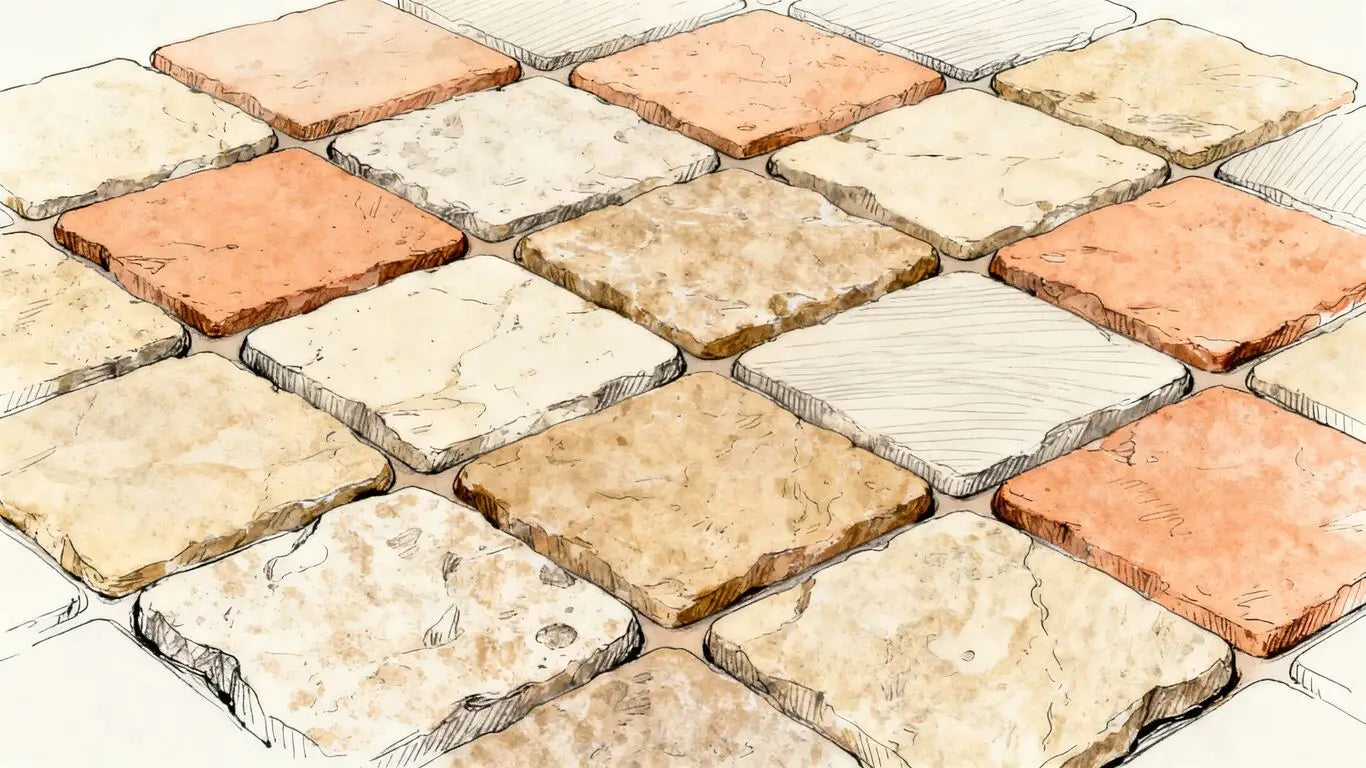
Travertine is perhaps the most beloved material for this pattern because of its naturally porous surface and warm color palette. At Surfaces Galore, we find that homeowners often choose this stone for its ability to soften a room while providing unparalleled natural character through its innate fossil markings and color variations.
The benefits of limestone for interior warmth
Limestone brings a subtle, sophisticated softness to any room. Its neutral tones blend easily with various color palettes, making it a reliable choice for both modern and traditional home renovations. Unlike harder, colder stones, limestone creates a surface that feels welcoming and physically grounded.
Durable porcelain alternatives for high-traffic areas
When a home requires high performance, porcelain tiles are a functional solution that captures the classic look of stone without the maintenance requirements. These engineered options are built for heavy foot traffic, offering peace of mind in busy corridors or kitchens where water and wear are common concerns.
Selecting slate and other textured stone options
Slate provides a rugged, dark-toned beauty that adds drama and contrast to an interior. Its layered structure means every tile has a unique cleft, which works well with the varied tile sizes of the French pattern to emphasize a rustic and tactile experience.
Ideal indoor applications for French pattern tiles
Creating a rustic kitchen aesthetic
Kitchen floors undergo significant stress, and the French pattern is remarkably effective at masking small scratches or spills. By using varied tile sizes, you add structural interest to a space that is often dominated by cabinetry and appliance lines.
Enhancing entryway and mudroom flooring
Your entryway is the first impression visitors get of your home. Using a complex, patterned stone layout here immediately signals a level of design intention. It establishes a classic and sophisticated tone for the rest of the house, successfully merging utility with home fashion.
Adding character to formal living room spaces
Formal living areas benefit from the warmth of natural stone, which can be easily warmed with area rugs if needed. The pattern itself acts as a decorative element, meaning you can keep your furniture choices simple while the floor carries the visual weight of the room.
Bathroom design considerations for pattern layouts
In bathrooms, the French pattern layout can create a spa-like retreat, especially when paired with natural materials that resist dampness. We recommend using a honed finish in these areas to ensure comfort underfoot during your daily routine.
Transforming outdoor spaces with French pattern tiles
Designing durable patio surfaces
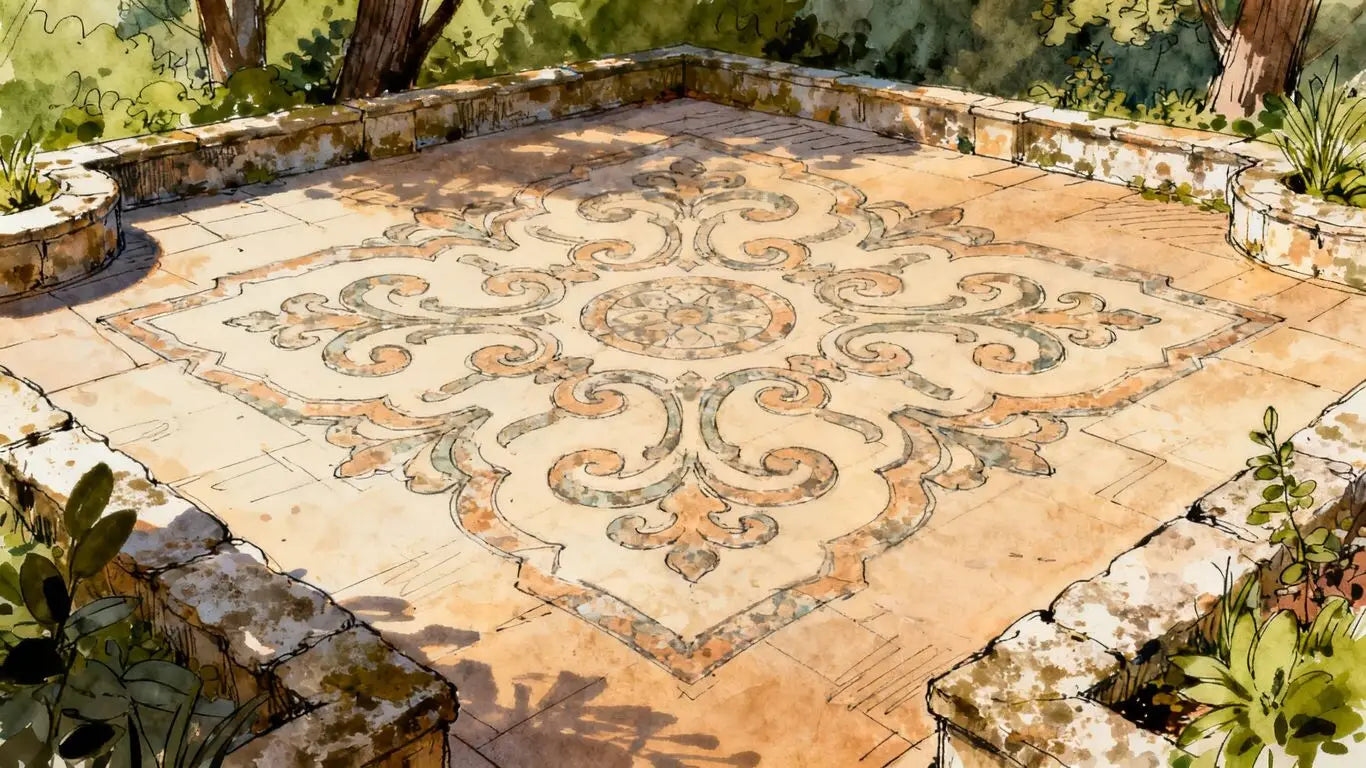
Outdoor patios are excellent sites for this pattern because the interlocking nature of the tiles handles the expansion and contraction typical of exterior environments. Whether you are creating a dining nook or a lounge area, this pattern provides a solid, long-lasting surface that looks like it has been part of the landscape for decades.
Enhancing pool deck and spa areas
Surfaces around pools need to be both elegant and functional. By selecting stones like travertine with a tumbled finish, you can achieve a non-slip, beautiful edge that bridges the gap between your garden and the water perfectly.
Integrating walkways into garden landscapes
Garden paths are the perfect place to experiment with a more dramatic, high-contrast grout or tile color. This approach helps the walkway feel like a natural extension of the path instead of a stark industrial addition.
Maintaining slip resistance in outdoor installations
Natural textures are key when installing these tiles outdoors. We recommend sticking to finishes that are not overly polished, as this preserves the stone's traction and ensures safety during rainier seasons.
Professional installation and project planning
Calculating tile square footage and layout complexity
Planning your layout is the most important step to prevent waste and ensure a balanced final look. You must account for the specific ratio of small to large tiles within each pattern pack before starting your order to ensure the repeat remains visually consistent.
Preparing the subfloor for natural stone weight
Natural stone is significantly heavier than traditional ceramic, which means your subfloor must be rigid and level. Addressing issues like deflection before laying stone is essential for its structural health over the coming years.
Working with different edge treatments
The look of your floor depends heavily on how the edges are finished. Consider the following common edge styles for natural stone installations:
| Edge Style | Best Application | Visual Characteristic |
|---|---|---|
| Tumbled | Rustic or traditional | Soft, rounded, natural |
| Honed | Transitional | Clean, flat, smooth |
| Chiseled | Artisan or antique | Bold, organic, irregular |
Managing grout lines for a seamless, authentic look
Managing grout lines can make or break the visual success of your project. When working with varied sizes, following a set of best practices helps ensure a high-end outcome:
- Use a color-matched grout to keep the focus on the stone texture.
- Maintain slightly wider joints than a standard grid to allow for natural stone size variance.
- Apply a professional-grade sealer strictly to the edges of porous stones.
- Double-check the layout against your dry-fit before applying mortar.
Styling and maintenance for long-lasting beauty
Selecting the right tile finish for your lifestyle
Your chosen finish dictates your cleaning routine. Polished stones show etching easily, while honed or tumbled finishes tend to hide minor everyday wear more gracefully.
Routine cleaning practices for natural stone
At Surfaces Galore, we advise homeowners to use pH-neutral cleansers. Harsh chemicals can strip away the beauty of high-end materials, so simplicity is always the superior approach for stone care.
Preventing stains and etching in high-traffic zones
In kitchens or entryways, immediate cleanup of spills is vital. Prevention through high-quality sealers is the most effective way to protect your investment, keeping stone looking fresh for years.
Long-term care and the importance of periodic resealing
Sealing is not a one-time chore. Natural stone requires periodic attention to remain resistant to moisture and stains. By maintaining a regular resealing schedule, you ensure your floor remains both stunning and sanitary.
Conclusion
Incorporating the French pattern into your home design is a lasting commitment to style and quality that rewards your space with movement and historical depth. By selecting the right natural stone and working with professional installation methods, you turn your floors into the most memorable element of your home, ensuring a sophisticated beauty that stands the test of time.
Frequently Asked Questions
Is the French pattern difficult to install?
While it requires more planning than a standard subway or grid layout, it is manageable for experienced contractors who use a proper dry-fit approach to manage the various tile sizes.
Can I use these tiles in wet areas?
Yes, natural stone tiles are excellent for bathrooms and pool areas, provided they are properly sealed and have a finish that offers sufficient natural traction.
How many sizes are usually in a set?
A standard French pattern layout consists of four different tile sizes, including square and rectangular pieces that work together to create the repeating design.
Does this pattern make a room look smaller?
Quite the opposite, the varied sizes and organic flow of the French pattern tend to make rooms feel more open and nuanced compared to rigid, small-scale grids.
Is sealing required for all French pattern tiles?
Yes, for porous natural stones like travertine, limestone, and marble, applying a professional sealer is essential to prevent staining and chemical etching.
What is the advantage of using porcelain instead of natural stone?
Porcelain is a durable, low-maintenance alternative that mimics the appearance of natural stone while resisting moisture and wear, making it ideal for busy families.
How do I figure out how much tile to order?
It is best to calculate your total surface area and add at least 15-20% for cuts and waste, as the modular nature of the patterns often requires more trimming than standard tiles.